Subhash Chandra Goenka is a prominent Indian media tycoon and the founder of the Essel Group. He is widely recognized as the pioneer of private satellite television in India, having launched Zee TV in 1992, which transformed the Indian broadcast industry. Beyond media, his business footprint expanded into packaging, infrastructure, and entertainment, and he has also served as a Member of Parliament in the Rajya Sabha.
What Are the Key Allegations and Scams Surrounding Him?
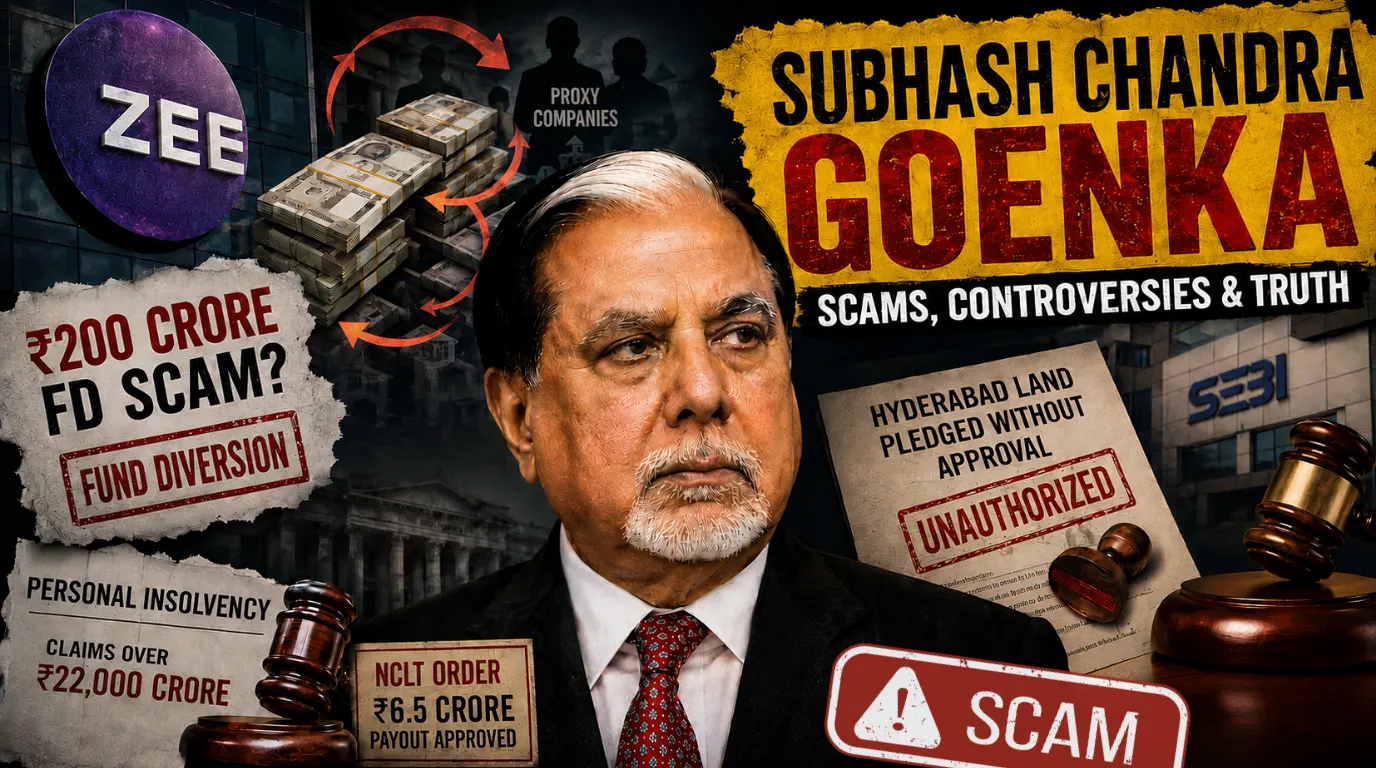
Fund Diversion and Circular Transactions (The ₹200 Crore FD Case), market regulator SEBI investigated Subhash Chandra and his son, Punit Goenka, for alleged financial irregularities at Zee Entertainment Enterprises Limited (ZEEL). SEBI found that ₹200 crore of ZEEL fixed deposits was used as collateral to back loans taken by promoter-linked Essel Group entities. When the loans defaulted, the bank adjusted the deposit. To cover this up, funds were allegedly routed through multiple proxy companies back into ZEEL to make it look like the debt had been settled by the original borrowers.
Unauthorized Asset Pledging (The Hyderabad Land Pledge Case), SEBI found Subhash Chandra and Punit Goenka guilty of committing fraud by pledging ZEEL prime land in Hyderabad to secure ₹726 crore in loans from Indiabulls Housing Finance for Essel entities. This pledge was executed without getting required approvals from ZEEL audit committee, board, or shareholders, and without disclosing it to public investors. As a result, SEBI barred both of them from the securities market for 12 months and imposed heavy financial penalties.
Personal Insolvency Proceedings, due to severe financial distress in Essel Group infrastructure arms, lenders initiated personal insolvency proceedings against Subhash Chandra over personal guarantees he provided for corporate loans. While the initial claims from creditors totalled over ₹22,000 crore, his office clarified that these were corporate guarantees rather than personal loans, noting that Essel entities had already repaid nearly ₹43,000 crore out of their ₹45,000 crore total debt. The NCLT later approved a resolution plan involving a ₹6.5 crore personal payout to clear the proceedings.