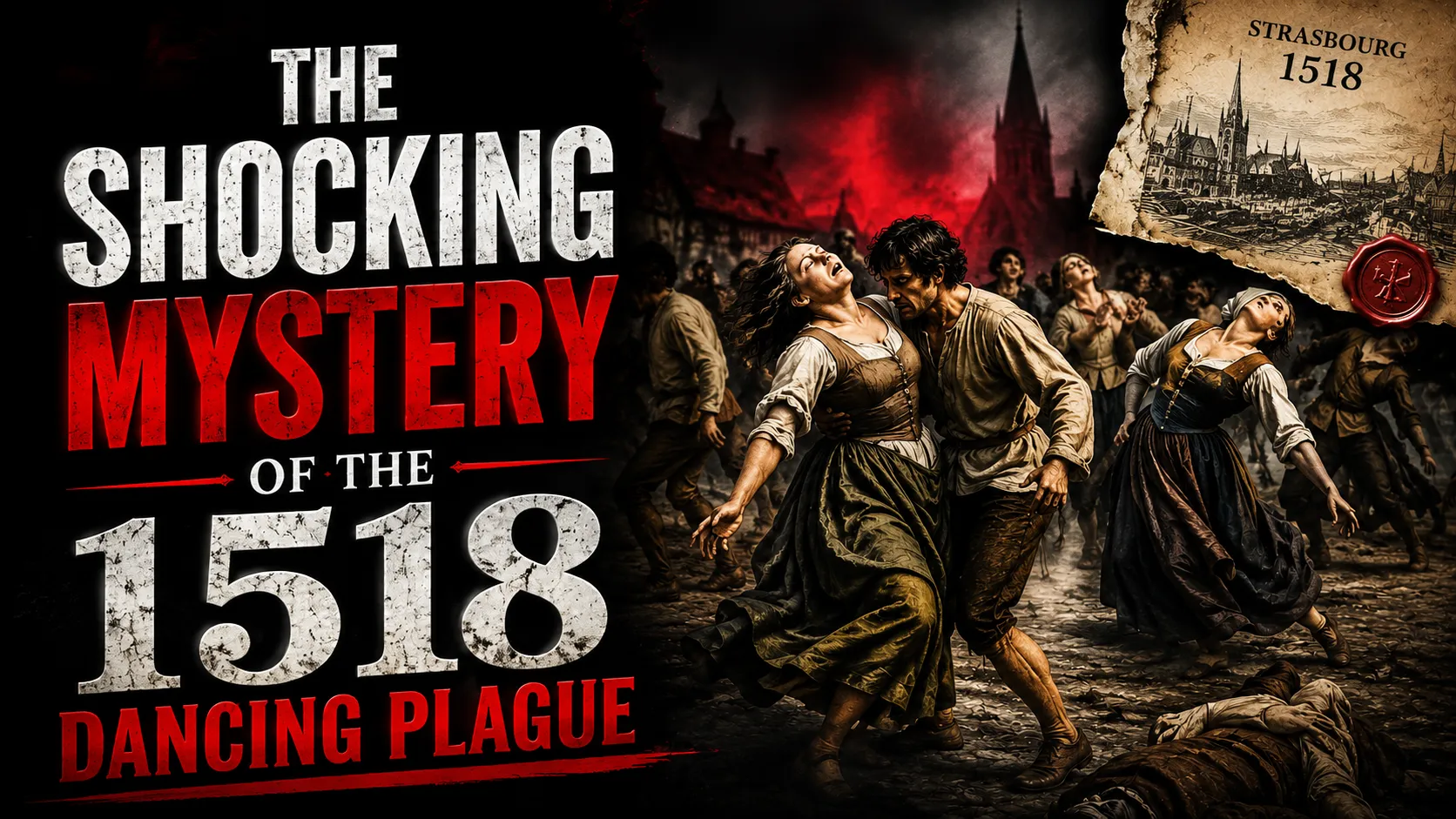
Imagine stepping out of your house and seeing your neighbor dancing wildly on the street with no music playing. This is exactly what happened in July 1518 in the city of Strasbourg, France. A woman named Frau Troffea walked outside and started dancing uncontrollably. She could not stop. Within a few days, dozens of people joined her. By August, around 400 people were twirling, shaking, and jumping in the streets without taking a break.
This strange event became known as the "Dancing Plague". The dancers looked like they were in a deep trance, with expressionless eyes and body movements they could not control. They danced under the burning sun until their feet bled, and many collapsed from total exhaustion. Local doctors and city leaders were completely confused. Believing that the only cure was to let them "dance it out," the city built stages and hired musicians. Unsurprisingly, this only made the condition spread faster to more people.
The wild dancing lasted for over two months before it slowly disappeared in September 1518. For hundreds of years, scientists and medical experts have tried to explain what really went wrong. Mass Hysteria, The most popular theory is extreme mental stress. During that time, the local people were facing severe hunger, poverty, and deadly diseases. Experts believe this terrible stress caused a psychological reaction that made people copy the strange behavior. Bread Poisoning, Another theory suggests that people ate bread made from rye contaminated with a toxic fungus called ergot. This fungus can cause violent body spasms and hallucinations. Even today, the Dancing Plague remains one of the weirdest medical mysteries in human history.