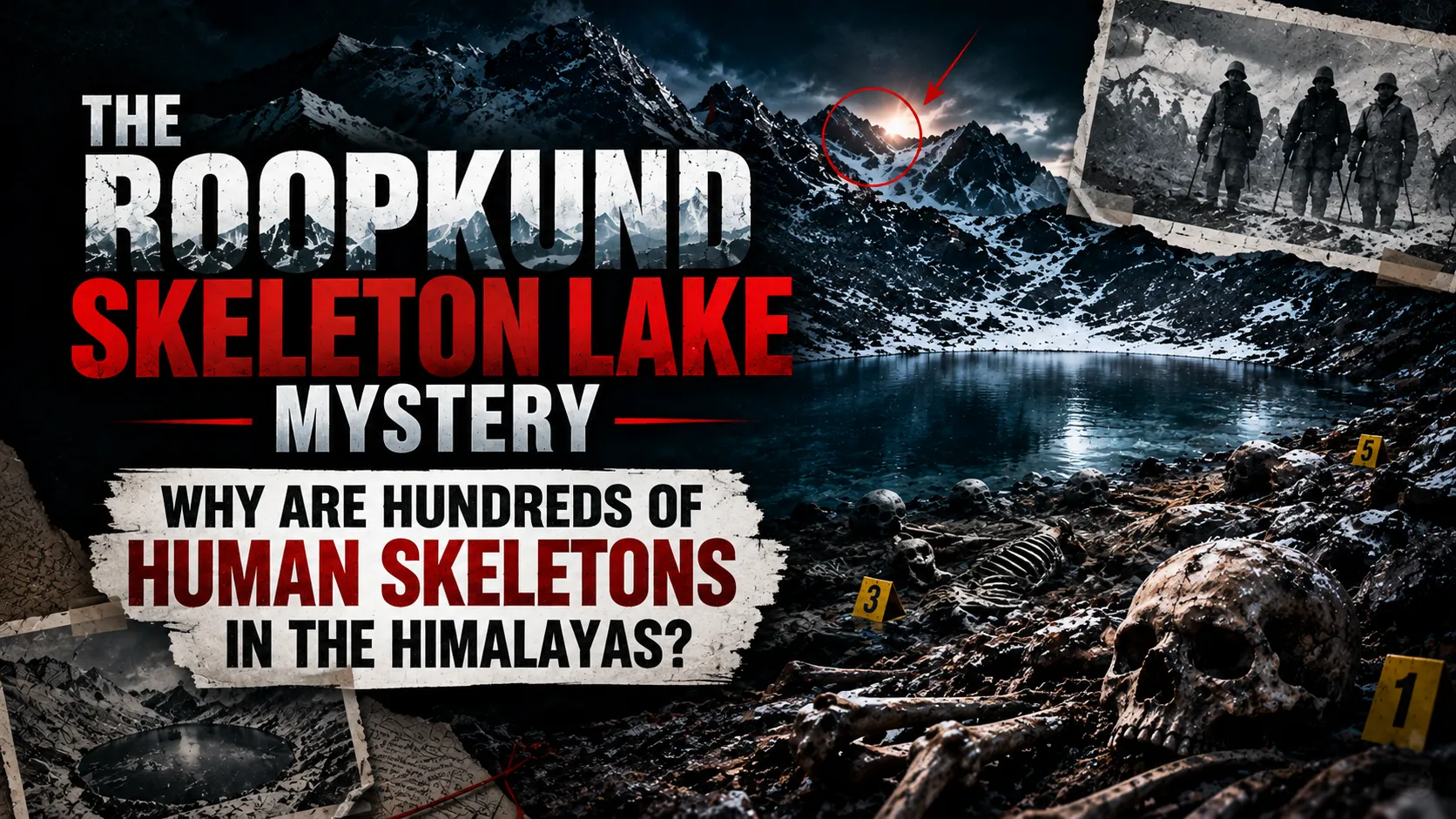
High up in the frozen Himalayan mountains of Uttarakhand lies a small, quiet body of water called Roopkund Lake. Situated over 16,000 feet above sea level, this place hides one of India most chilling secrets. Every summer, when the ice melts, hundreds of human skeletons emerge around the edges of the water. For decades, local villagers and scientists wondered who these unfortunate travelers were and how they ended up dead in such a remote place.
In 1942, a forest ranger rediscovered the site during World War II. At first, people feared these were enemy soldiers. However, detailed examinations showed that the bones were centuries old. Local folklore speaks of a royal procession that angered the mountain goddess Nanda Devi, causing her to send a sudden, fatal storm of massive hailstones. Since many skulls had rounded cracks on them, researchers initially believed that huge hail hits killed a single group of pilgrims around the 9th century.
Modern DNA Science Shatters the Old Theory and Deepens the Mystery
In 2019, an international scientific study tested the ancient DNA of the skeletal remains, and the results completely shocked everyone. The tests proved that the dead did not belong to a single group, nor did they die in one single accident.
Instead, the bones belong to people from different genetic backgrounds who died nearly 1,000 years apart! While the oldest group consisted of South Asian travelers from around 800 CE, another group of people arrived around 1800 CE. Surprisingly, DNA revealed that this second group had origins in the Eastern Mediterranean, near modern Greece. Why European travelers were climbing a dangerous Himalayan pass centuries ago remains an unsolved mystery today.