
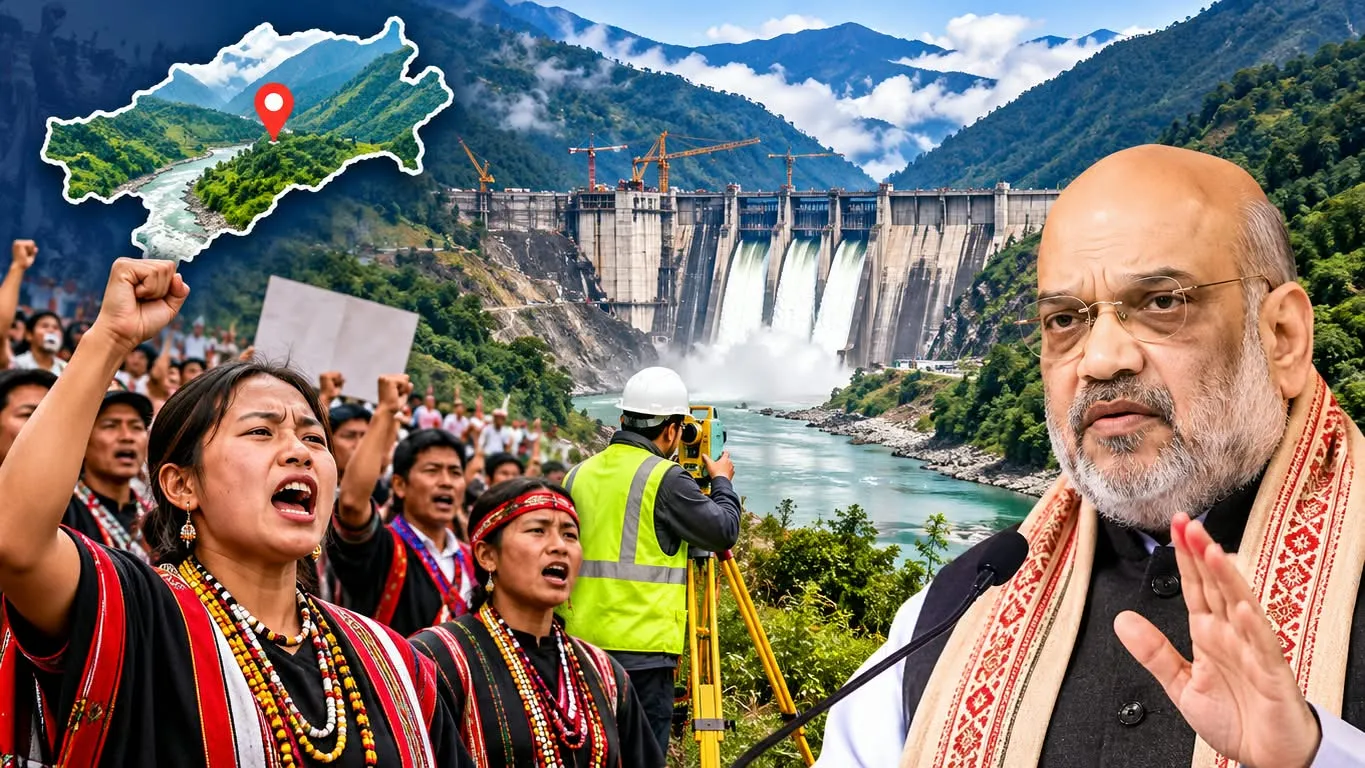
In the hills of Arunachal Pradesh, even a soil test can feel like the start of a permanent goodbye when a massive dam is involved. According to recent news reports, Home Minister Amit Shah landed in Arunachal Pradesh on November 22 for a two day review visit as protests continue against the proposed 11,200-megawatt Siang Upper Multipurpose Project.
Spearheaded by the National Hydroelectric Power Corporation across the Siang, Upper Siang, and East Siang districts, the project is billed as India's largest hydropower and water storage facility. Yet, it has hit a roadblock right at the prefeasibility survey stage due to fierce opposition from sections of the indigenous Adi community, who worry about losing their ancestral land and river ecology.
Trying to cool tempers during his visit, Amit Shah assured residents of the Siang valley that the government is open to positive dialogue and understands their fears. At the same time, he made it clear that New Delhi views the venture declared a National Project back in February 2008 as essential for regional development and national strategy. Unlike ordinary power plants, the Centre and Chief Minister Pema Khandu's government see the reservoir as a vital shield for flood control and water storage. With upstream construction rising across the border in Tibet, where the Siang begins as the Yarlung Tsangpo, India is racing to balance strategic urgency with local trust.