In a major breakthrough in space science, astronomers have discovered the oldest and most distant quasar ever recorded. Formed just 630 million years after the Big Bang, this cosmic giant is giving scientists a rare glimpse into the universe when it was only 5% of its current age. Formally named J1504+6252 and nicknamed Dún Aonghasa after a historic stone fort in Ireland, the object was first spotted by the European Space Agency’s Euclid space telescope. Later observations from NASA’s Hubble and James Webb Space Telescopes confirmed the finding.
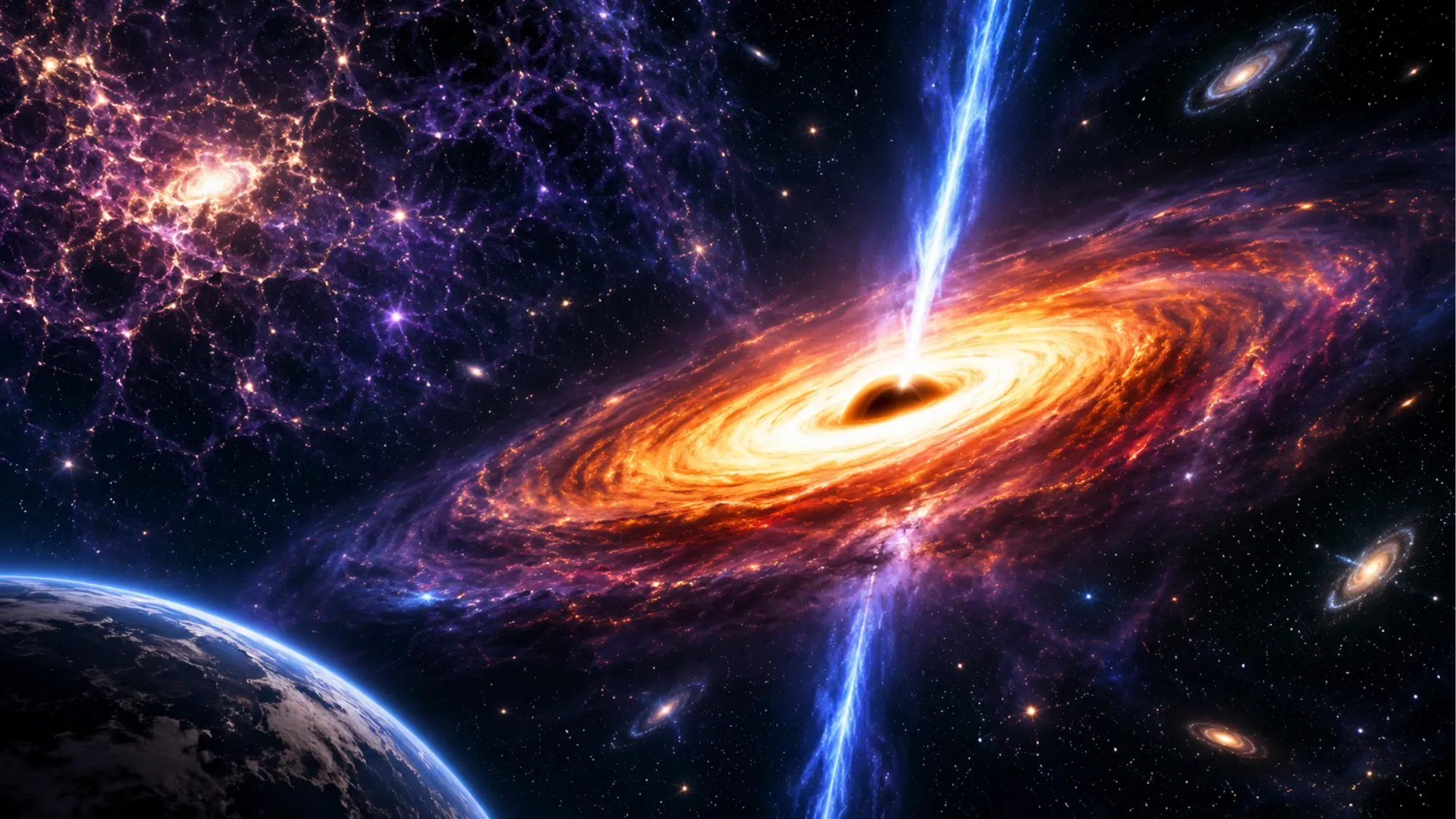
A quasar is the super bright centre of a young galaxy, powered by a massive black hole. What has shocked scientists is the sheer size of this black hole. Even in the very early days of the universe, it had already grown to a mass 360 million times heavier than our Sun.
Lead researcher Julien Wolf from the European Southern Observatory called this discovery a massive leap back in cosmic time, pushing previous records back by nearly 40 million years. Because the black hole appears to be consuming surrounding gas quite slowly, scientists are puzzled about how it grew so big, so fast. Published in the journal Astronomy & Astrophysics, this discovery challenges existing theories on how the earliest black holes and galaxies took shape.