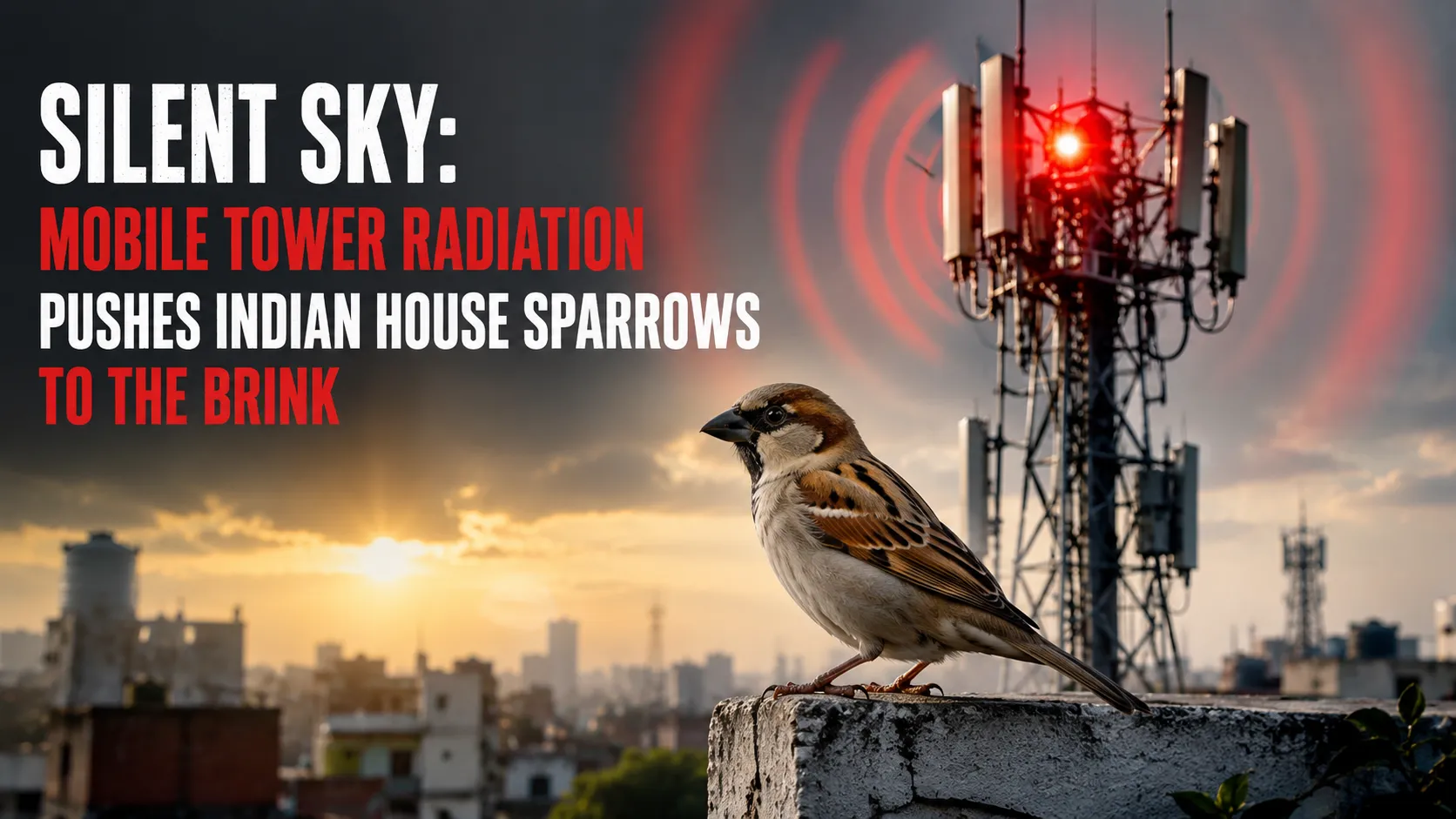
New Delhi The cheerful chirping of house sparrows, once a familiar morning sound in millions of Indian households, is rapidly fading from our cities and towns. Environmental experts and researchers express deep concern over the sharp fall in the house sparrow population across the country. A major reason behind this worrying drop is the uncontrolled growth of mobile network towers in residential areas. Studies suggest that continuous electromagnetic radiation emitted from these communication towers severely affects tiny birds.
The radiation damages their thin eggshells, preventing chicks from hatching, and disturbs their natural navigation system. As a result, sparrows struggle to build nests, reproduce, and survive near high density network zones.
The rapid loss of green spaces, concrete modern building designs, and high pesticide use have already made survival difficult for these birds. However, the invisible web of mobile network signals has made urban environments nearly uninhabitable for them.
Wildlife activists are now urging the government to strictly regulate mobile tower installations near residential colonies and parks. They also advise citizens to set up wooden birdhouses, water bowls, and food grains on balconies. Without urgent action, India risks losing one of its most cherished feathered friends forever.