
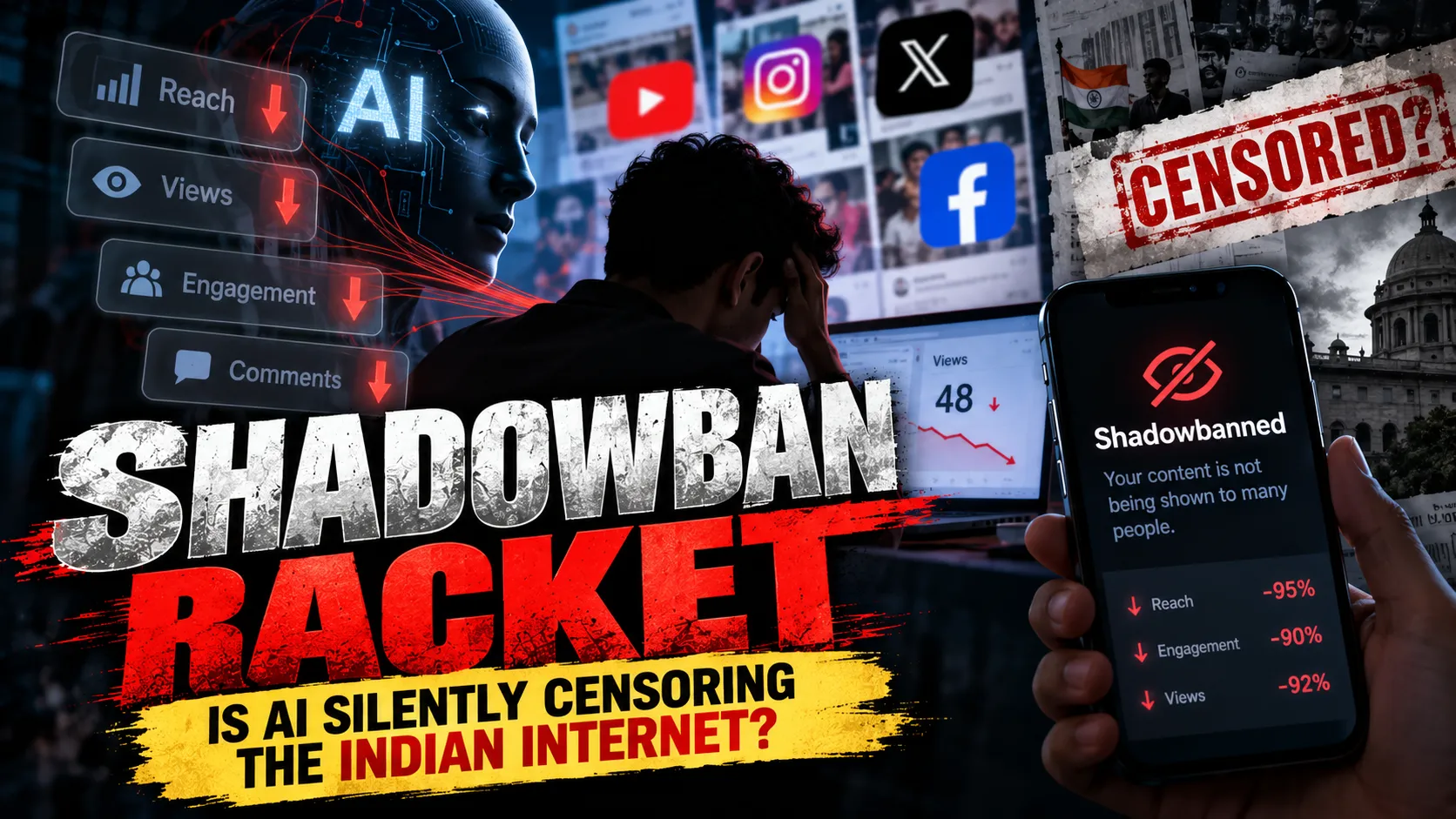
A fierce controversy is brewing across the Indian digital ecosystem as millions of social media users, creators, and political commentators accuse major tech platforms of covert shadowbanning. Instead of explicitly deleting posts or suspending accounts, automated AI moderation algorithms are allegedly restricting the reach of controversial opinions, viral political takes, and sensitive trending news. Critics argue that opaque algorithmic filters are quietly suppressing free speech under the guise of combating hate speech and misinformation.
The core of the dispute lies in how next-generation AI content classifiers evaluate context, local slang, and political nuance. Tech giants rely on automated real time systems to process millions of posts per second, but creators report that harmless commentary, investigative reports, and grassroots protests are frequently flagged as policy violations. Because these enforcement actions happen silently,without notifying the account owner,creators suddenly experience dramatic drops in engagement, leaving them unable to appeal algorithmic decisions or defend their reach. You can learn more about official digital rights standards on the Ministry of Electronics and Information Technology.
Free speech advocates warn that delegating digital censorship to secretive AI guardrails sets a dangerous precedent for democratic discourse, especially during high stakes national events and election cycles. Conversely, platform safety teams maintain that automated moderation is the only scalable way to curb online harassment, illegal content, and coordinated disinformation campaigns. As public outrage grows, legal experts and digital rights activists are calling for mandatory algorithmic transparency laws to ensure users are protected under open internet regulations.