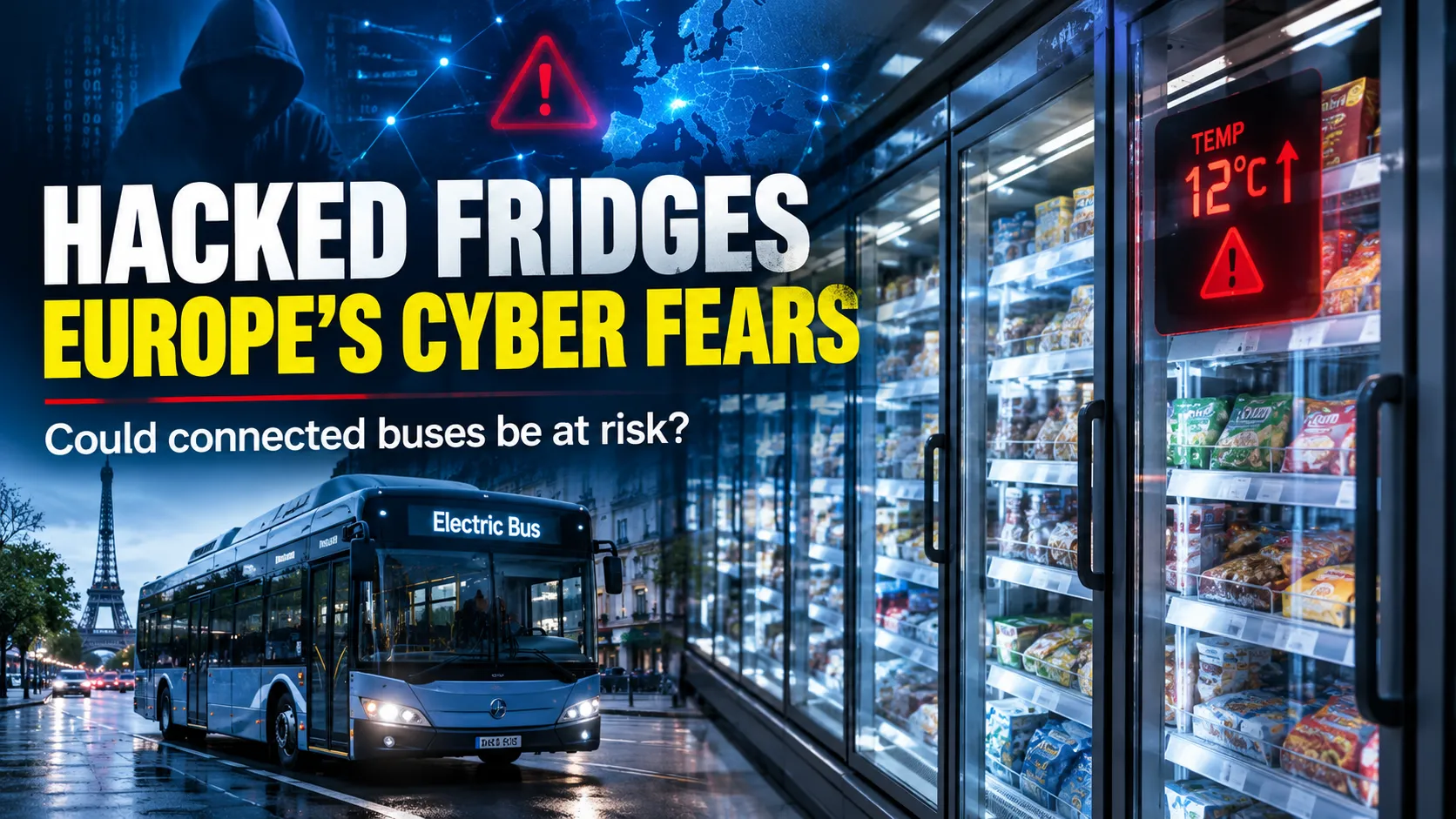
A major cyberattack on supermarkets in France has raised fresh concerns about the safety of internet connected systems. Hackers reportedly took control of refrigeration systems in hundreds of supermarket stores and forced them to heat up to 50°C, damaging equipment and causing large amounts of food to be thrown away.
The attack affected several retail chains, including Intermarche and Cooperative U. Some stores reported fires and heavy financial losses. French authorities have launched an investigation to find out how the attackers gained access. The affected refrigeration systems were reportedly running outdated software, which may have made them easier to target.
The incident has also raised concerns about electric buses made by Chinese companies and used in Europe. Transport authorities in Denmark and Norway have previously examined whether buses with remote software access could be stopped or controlled from a distance.
These buses use internet connected technology for software updates and remote checks. While these features can make maintenance easier, they may also create security risks if hackers gain access to the systems. Norwegian transport agency Ruter tested Chinese made Yutong buses and found that the manufacturer had digital access to individual vehicles. Danish transport operator Movia also raised concerns about the possibility of remote access being misused.
However, the French supermarket attack does not prove that China has remotely shut down buses or plans to do so. It shows how vulnerable connected equipment can become when security systems are weak or software is outdated. The incident has renewed calls across Europe for stronger cybersecurity, regular software updates and better protection for essential services. Experts warn that connected technology must be secured to prevent digital attacks from causing real world damage.