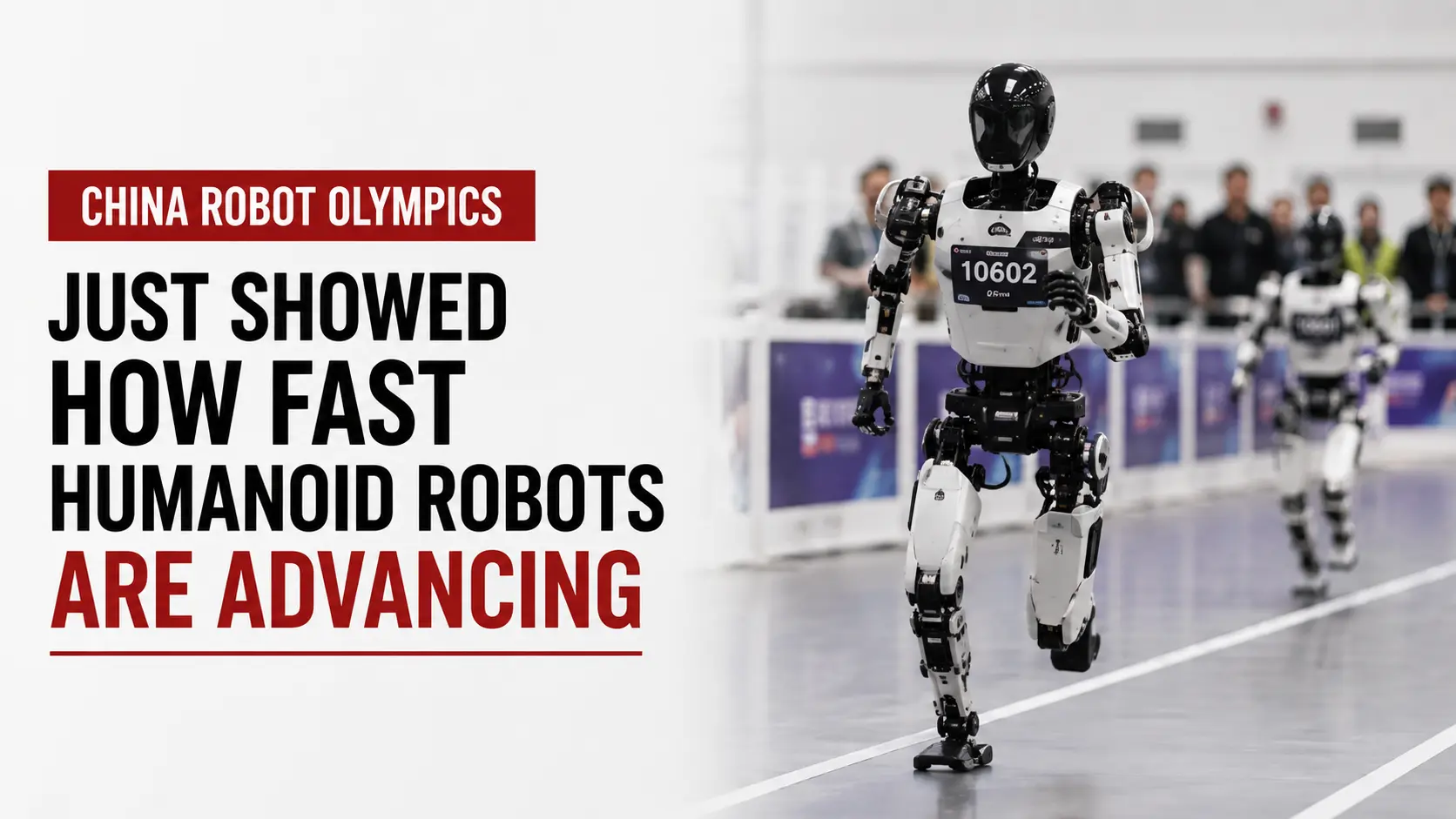
Human like machines are moving out of science fiction movies and stepping straight into real life. At the World Humanoid Robot Games in Beijing popularly called the Robot Olympics more than 2,000 advanced humanoid robots from around the world gathered to compete. The event proved one big point artificial intelligence and robotics are advancing much faster than anyone expected.
Just a few years ago, humanoid robots struggled to walk without falling over. Today, they are running, jumping, playing table tennis, and completing tasks completely on their own without human remote controls. During the athletic events, running robots clocked jaw dropping speeds in the 100 meter sprint, running faster than the legendary human record of 9.58 seconds. Other models demonstrated incredible vertical power, clearing high jumps over 2.8 meters.
However, this mega event was not just about sports and entertainment. Beyond running on tracks, these machines were tested on practical, real world skills. Robots successfully sorted medicines, carried heavy boxes in mock warehouses, served drinks, and performed simulated fire fighting and rescue operations. These tests showed how close robots are to helping in everyday Indian style environments, such as busy factories, hospitals, hotels, and homes.
Experts explain that China huge investment in manufacturing and AI technology is driving this speed. Component costs are dropping quickly, allowing companies to build smarter, cheaper machines. While fully independent household robot helpers are still a few years away, the Beijing games clearly showed that future human robot teamwork is arriving much sooner than imagined.