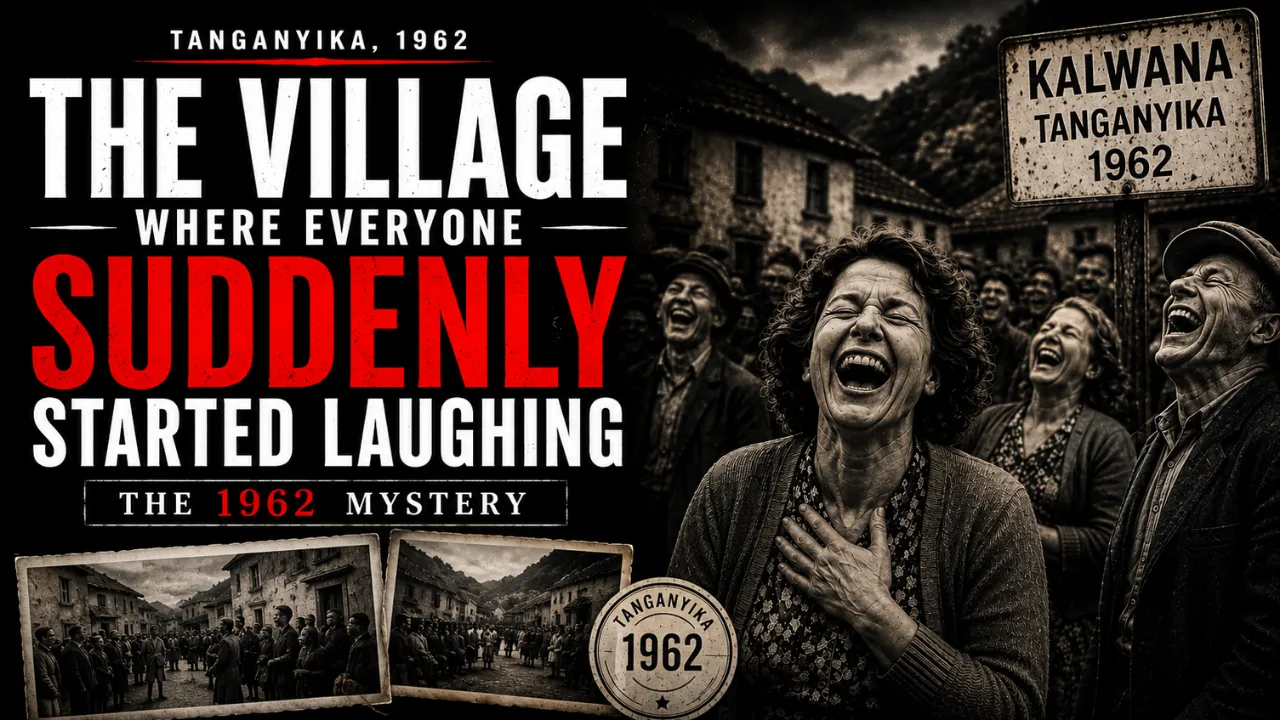
Imagine a day when someone tells a joke, and everyone starts laughing. But instead of stopping after a few seconds, the laughter continues for hours, days, and even months. This sounds like a movie story, but it actually happened in real life. In January 1962, a very strange event took place in a small village in Tanganyika (now known as Tanzania in Africa). This unusual event is famous in history as the "Tanganyika Laughter Epidemic".
It all started inside a boarding school classroom. Three young girls began laughing, but surprisingly, they could not stop. Soon, the uncontrollable giggling spread like fire to other students. Out of 159 students, 95 girls were caught in this strange cycle. Their continuous laughter lasted from a few hours to sixteen whole days.
This was not a happy moment for anyone. Victims faced pain, crying, breathing problems, and extreme weakness. The situation became so serious that authorities had to close the school completely. But when the students returned home, they carried the mysterious condition to their family members. Thousands of people in nearby villages got affected, and over fourteen schools were shut down.
Doctors and scientists ran tests to find a physical virus or food poisoning, but they found nothing wrong in their bodies. Ultimately, experts concluded it was a case of Mass Psychogenic Illness (mass hysteria). The young students were facing high mental stress due to strict school rules and country changes. Stress manifested as unstoppable laughter that spread through psychological pressure. It took over eighteen months for the outbreak to completely stop. Today, it remains one of the most mysterious psychological events in modern history.