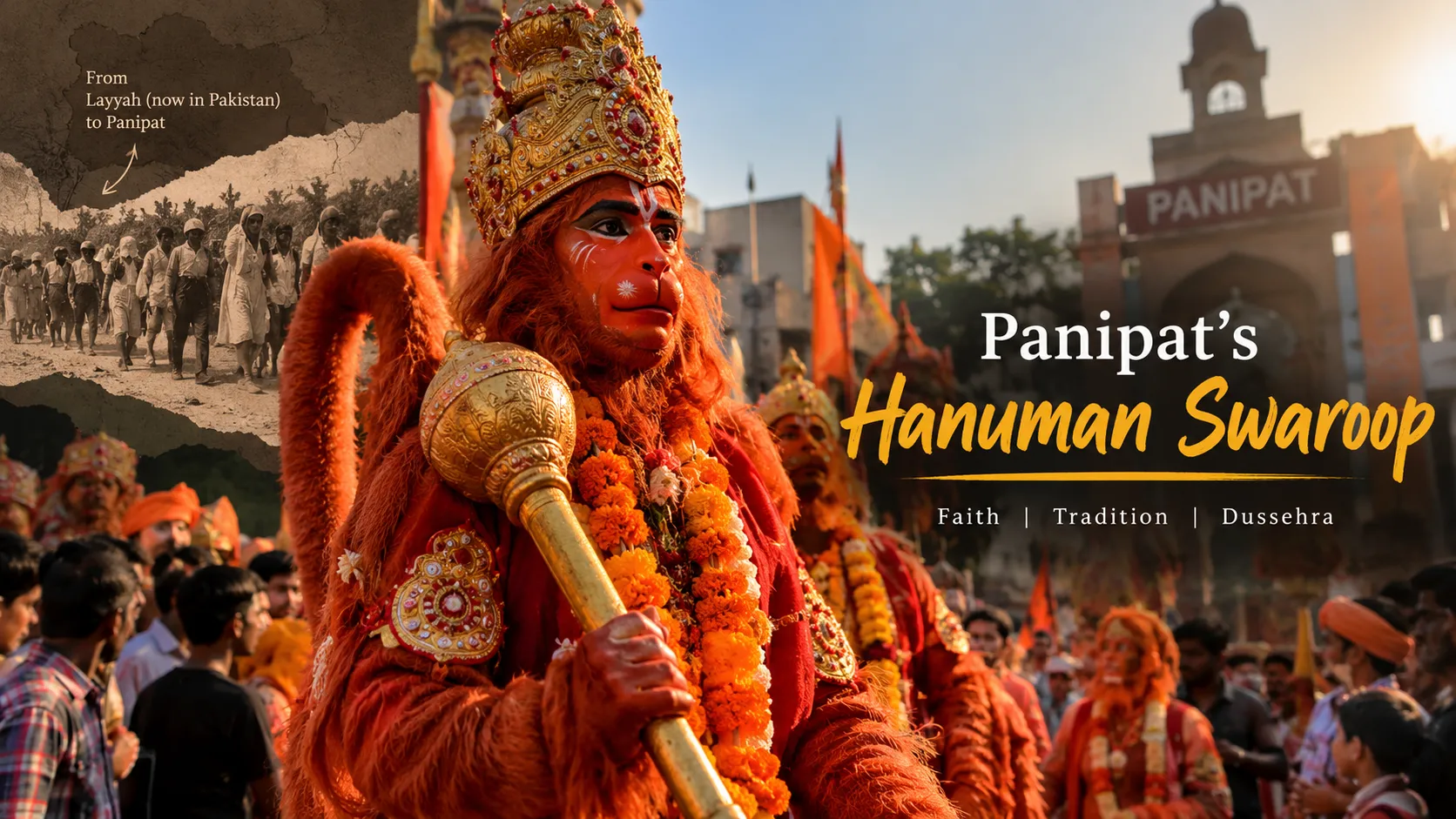
Every year on Dussehra, the streets of Panipat come alive with devotion, as devotees gather to witness the unique tradition of Hanuman Swaroop. More than a religious procession, this centuries old cultural practice represents faith, discipline and a deep connection with Lord Hanuman.
The roots of this tradition can be traced to Layyah, in present day Pakistan, before India Partition in 1947. According to historical accounts shared by members of the community, devotees began adopting Hanuman Swaroop as an expression of their devotion and determination to preserve their religious traditions. After Partition, families migrating to Panipat brought this unique practice with them, where it gradually became an important part of the city Dussehra celebrations. Becoming a Hanuman Swaroop is not simply about wearing a costume. Devotees undergo a demanding period of spiritual preparation, often lasting 40 days. During this time, participants follow strict religious routines, observe celibacy, eat simple meals, recite the Hanuman Chalisa and dedicate themselves to prayer.
On Dussehra, participants appear in traditional attire, wearing large Hanuman crowns, applying sindoor and carrying distinctive bamboo tails. Accompanied by devotional chants and music, they move through the streets as thousands of devotees gather to seek blessings.
Today, the Hanuman Swaroop tradition is an integral part of Panipat cultural identity. It connects generations, preserves the memories of families who migrated during Partition and inspires young devotees to embrace spiritual discipline. As the city celebrates Dussehra, this remarkable tradition reminds everyone that faith is not merely expressed through rituals but also through dedication, sacrifice and the spirit of service.