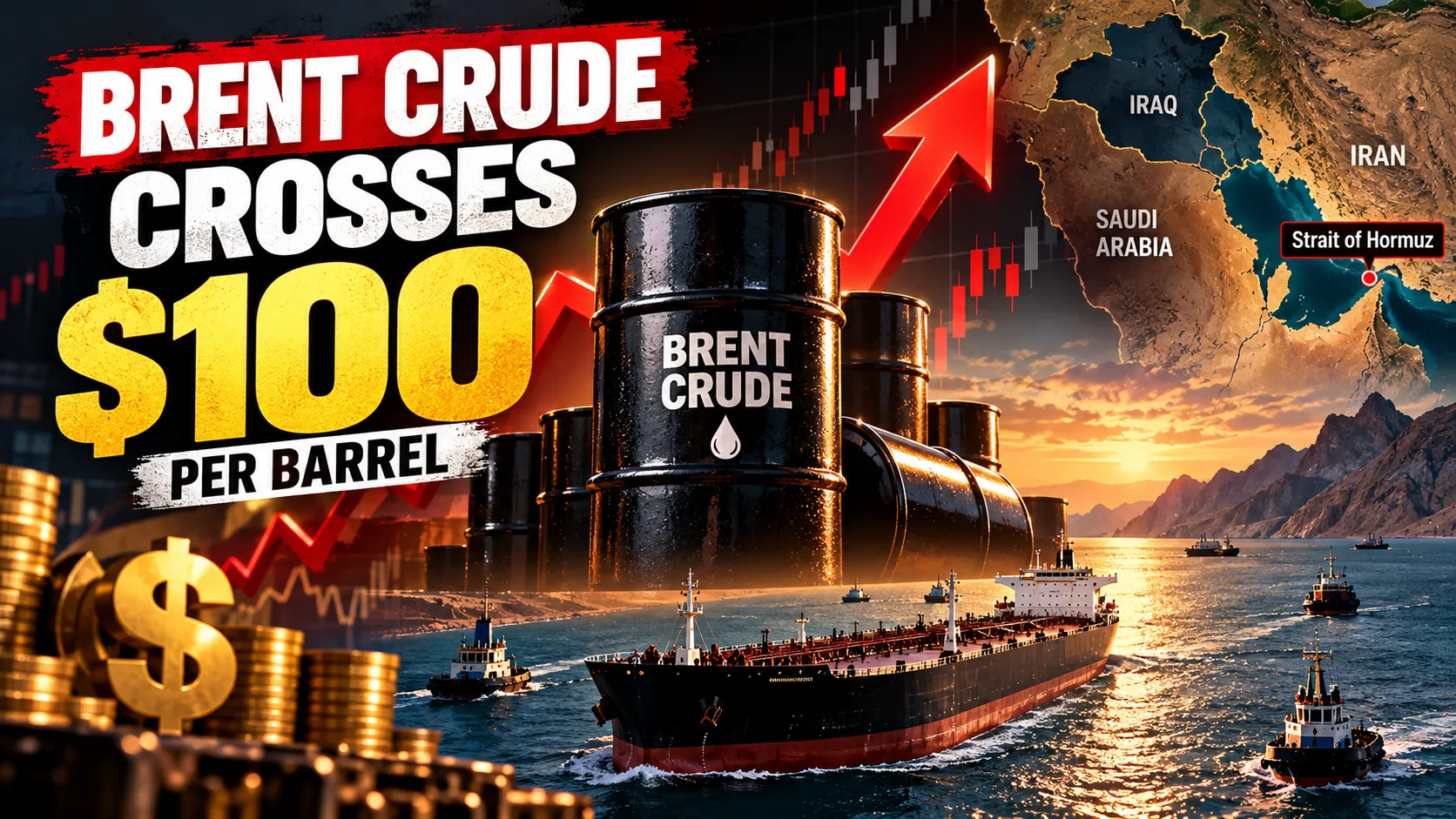
Global crude oil prices have surged past the critical $100 per barrel mark, triggering fresh economic concerns worldwide. This sharp rise is primarily driven by escalating geopolitical conflicts in the Middle East and serious shipping disruptions across key maritime routes, including the Strait of Hormuz and the Red Sea.
The sudden price jump comes as major production hubs face severe operational risks and shipping corridors see restricted traffic, cutting off normal oil supplies to global markets. Adding to market panic, major oil producing nations under OPEC+ have kept tight control on production cuts rather than increasing supply. Meanwhile, rising global energy demand driven by industrial activity and international travel has created a heavy imbalance between supply and demand.
For India, this sudden surge poses significant economic challenges. India imports nearly 85% of its total crude oil requirement to meet domestic energy demands. A sustained period of $100 plus crude oil directly inflates the country import bill, puts downward pressure on the Indian Rupee against the US Dollar, and raises overall transportation costs.
If international prices remain elevated, Indian consumers may soon face higher retail prices at petrol pumps, which could increase transport fares and daily household expenses. Government officials and financial analysts are closely watching the situation, exploring strategic reserve releases and alternative supply deals to shield domestic consumers from severe inflation.