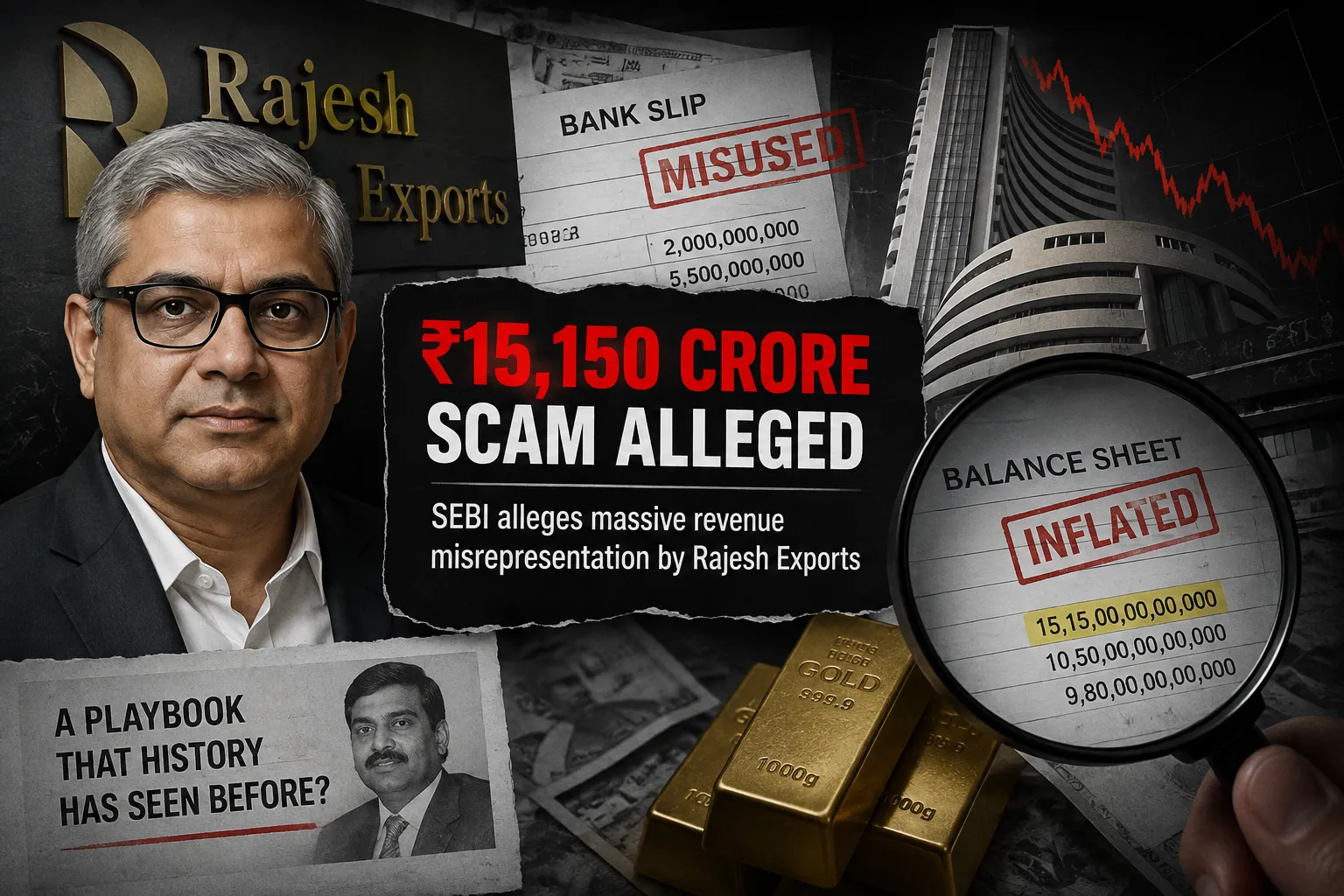
When SEBI uncovered an alleged ₹15.15 lakh crore revenue misrepresentation at Bengaluru based rajesh exports, Indian market observers immediately drew comparisons to the infamous 1992 Harshad Mehta scam. While separated by over three decades, both corporate crises represent monumental failures of systemic oversight, driven by the creation of massive financial illusions.
Harshad Mehta exploited structural loopholes in the Indian banking system, using fake Bank Receipts (BRs) to siphon funds into the stock market and artificially inflate share prices. In contrast, the modern play at Rajesh Exports shifted from bank receipts to balance sheet optics, where nearly 99% of its reported revenue was tied to opaque, untraceable overseas subsidiaries like Swiss based Valcambi SA. Both masterminds manufactured an aura of untouchable scale Mehta did it with ready forward bank deals, while Rajesh Mehta allegedly did it by converting individual gold derivative trades into thousands of crores in bogus corporate sales.
The true common denominator between both scandals lies in the tragic exploitation of trust and systemic gatekeeper blind spots. In 1992, institutional gatekeepers failed to verify physical securities behind bank receipts; in 2026, auditors and analysts failed for years to look beyond impressive consolidated P&L statements to verify physical trade data hidden behind Swiss privacy laws.
Just as Mehta fall wiped out the savings of countless middle-class households, the collapse of Rajesh Exports stock devastated nearly two lakh retail investors alongside major state institutions like LIC. Both cases stand as timeless cautionary tales: whether generated through fake bank paper in the nineties or ghost balance sheets in the digital era, any empire built on financial paper shuffling ultimately crumbles, leaving ordinary investors to pay the price.