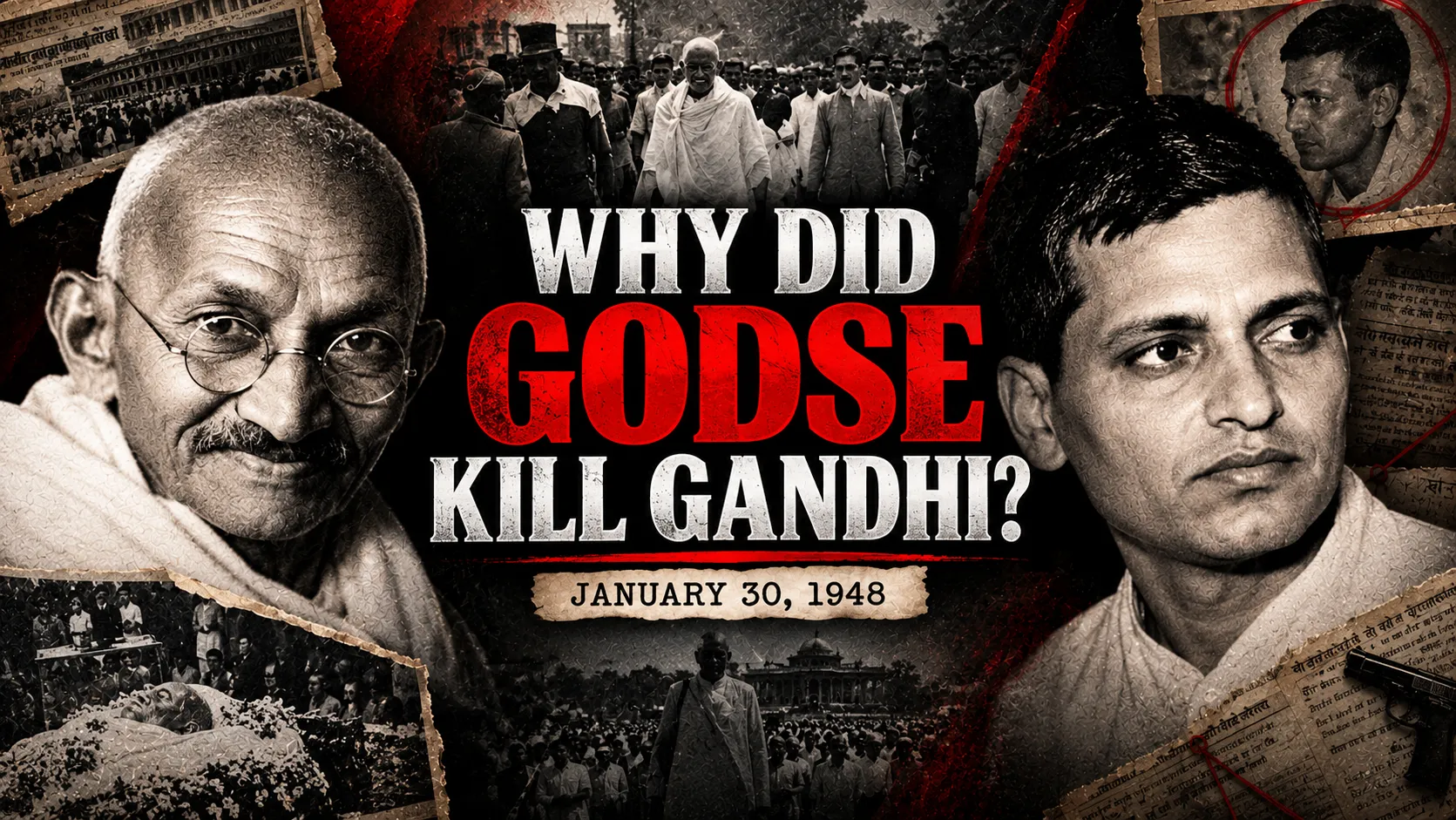
On the evening of January 30, 1948, Mahatma Gandhi was walking to a prayer meeting at Birla House in New Delhi. Suddenly, a man named Nathuram Godse stepped out from the crowd, bowed respectfully to Gandhi, and fired three bullets at point blank range. The Father of the Nation collapsed and passed away, leaving India and the entire world in deep shock. Gandhi had led India to independence from British rule using non violence (Ahimsa). However, his tragic death raised a question that people still ask today, Why did someone take the life of a leader dedicated to peace?
Nathuram Godse was a nationalist from Pune who strongly disagreed with Gandhi political views and methods. The main reason behind Godse anger was the Partition of India in 1947, which divided the country into India and Pakistan and led to massive violence and human suffering. Godse believed that Gandhi policy of extreme non violence weakened India. He felt that Gandhi was favoring Pakistan during negotiations, especially regarding the transfer of ₹55 crore to Pakistan after partition.
Godse thought this money would be used against India in war. In his view, Gandhi actions were harming the Hindu community and compromising India security. Feeling that Gandhi stood in the way of a strong and unified nation, Godse decided to assassinate him. During his trial, Godse stated that he acted out of love for his motherland, though his method was universally condemned. January 30 remains a pivotal day in Indian history, marking both a huge loss and a reminder of the dangers of extreme ideology.