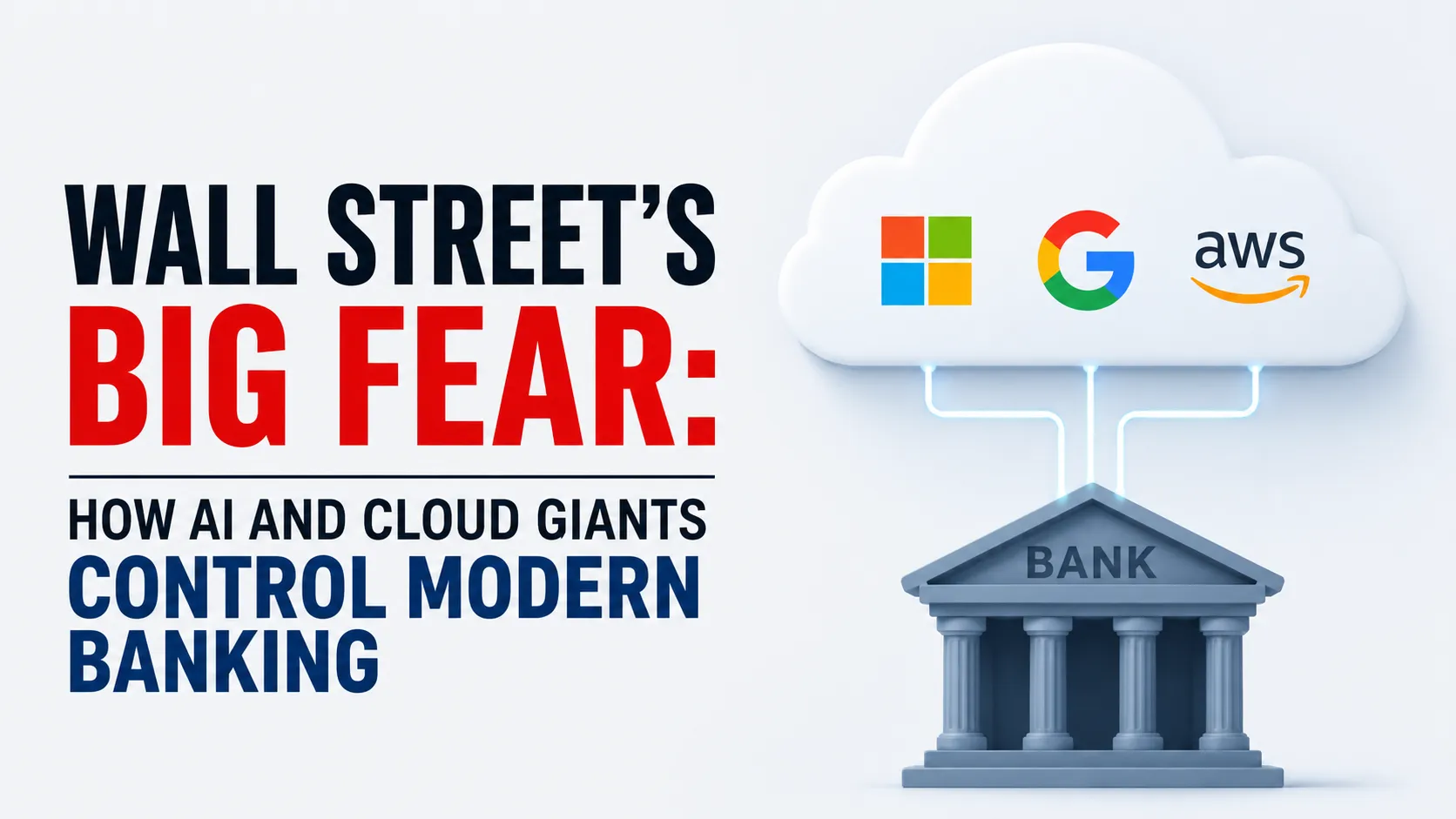
Artificial intelligence is transforming global banking, from automated customer service to complex trading algorithms. Top financial institutions on Wall Street and across the globe are heavily investing in AI tools to boost efficiency and cut operational costs. However, this fast paced digital shift has brought a major, hidden threat absolute reliance on a tiny group of Big Tech companies.
Most international banks do not own the massive data centers or advanced hardware needed to run large language models. Instead, they rent infrastructure from a few dominant cloud providers, such as Microsoft, Google, and Amazon. Rating agency Moodys recently warned that this concentrated reliance creates a massive credit and operational risk for the entire financial sector. If a single cloud giant suffers a technical outage or cyberattack, it could trigger a widespread disruption across multiple banks within minutes.
Why Big Tech Control Spells Danger for Global Financial Systems?
The growing monopoly of cloud and AI suppliers limits flexibility for financial institutions. Once a bank builds its daily operations, fraud detection, and risk management tools around one specific tech provider, switching to another supplier becomes almost impossible. Financial experts worry that tech giants could eventually raise prices significantly, taking away the cost savings banks expected to achieve through AI.
Global regulators are stepping up oversight on third party tech vendors to prevent systemic collapses. To safeguard their networks, several banks are experimenting with open source AI models and split cloud strategies. However, until institutions find safer balance points, the banking sectors growing reliance on cloud monopolies remains a critical risk for the global economy.