
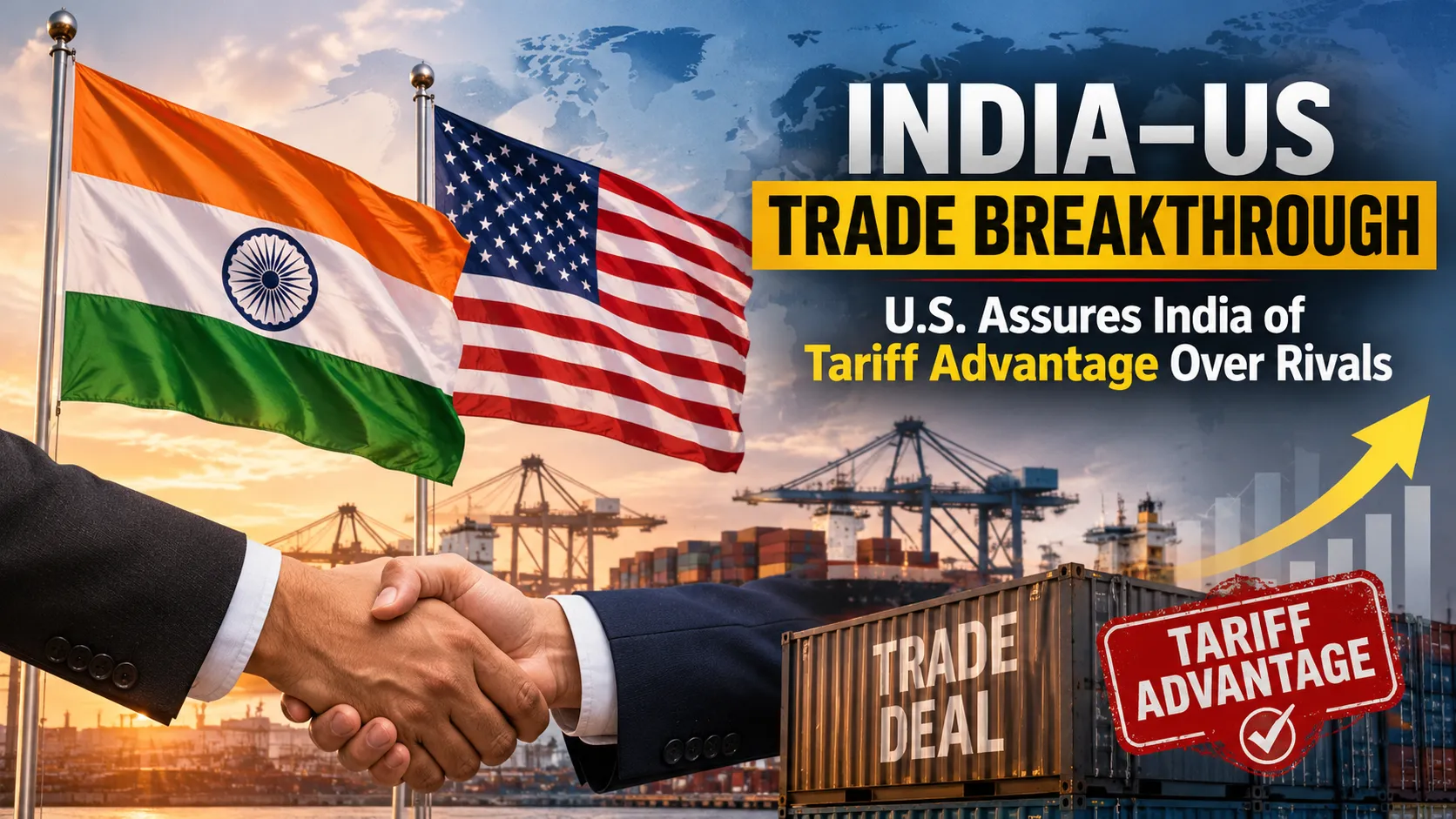
India US Trade Deal India has received an important assurance from the United States that could strengthen its position in the global export market. American negotiators have reportedly assured India of a comparative tariff advantage over competing countries under the proposed bilateral trade agreement. According to senior Indian government officials on November 13, 2026, both countries are continuing negotiations to finalise the first phase of the trade agreement. The assurance means Indian exporters could receive more favourable tariff treatment compared with competitors selling similar products in the American market.
A comparative tariff advantage could make Indian products more competitive in the United States by potentially reducing the additional costs faced by exporters. Industries such as textiles, engineering goods, pharmaceuticals, chemicals and other manufacturing sectors could benefit if the final agreement provides favourable terms. The development is particularly important because the United States is one of India's largest export destinations. Indian merchandise exports to the US reached $59.52 billion between April and October of the 2026-27 financial year, compared with $51.99 billion during the same period last year. Despite the positive development, the agreement has not yet been signed. Both countries are working on customs procedures and trade facilitation provisions.
The final tariff structure will also depend on the outcome of the ongoing US investigation into excess industrial capacity under Section 301 of the Trade Act.The first phase of the proposed agreement will focus on goods, while services related discussions are expected in a later phase. The latest assurance signals progress in India-US trade negotiations. However, the actual benefits will become clear only after both governments finalise the tariff arrangements and sign the agreement. For Indian exporters, the proposed deal could open new opportunities in the American market and strengthen India's position against competing manufacturing economies.