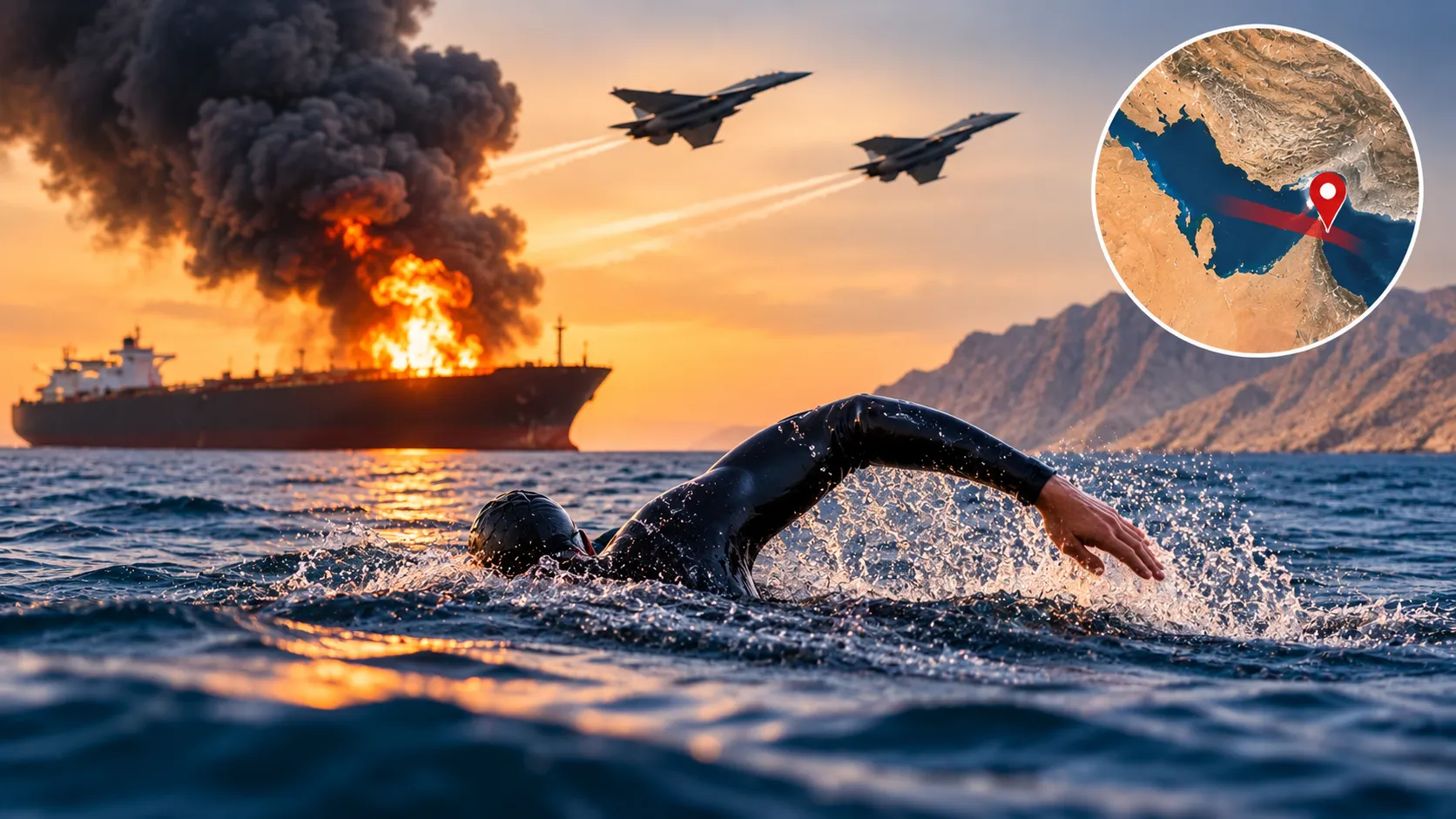
Endurance swimmer and UN Patron of the Oceans Lewis Pugh went into the Strait of Hormuz to spotlight fragile ocean life not to swim beside active warfare. Yet explosions echoed around him and fighter jets flew overhead turning a distant conflict into something happening right beside his team. Thirty minutes into a swim a tanker was struck. Pugh and his crew pulled out of the water and headed back to shore. Most teams might pack up and leave after that. Pughs group returned the next day.
He had planned a 15 kilometre swim over three days off Omans Musandam Peninsula to draw attention to the regions marine environment. Instead the route ran straight through an active conflict zone.The tension carried into day two. About ninety minutes into that swim Pugh saw a massive plume of smoke rising behind a mountain. The flames reached high enough to be visible above a 150 metre high mountain a stark reminder of the instability surrounding waters prized for their ecology and shipping traffic alike.
For Pugh the Strait of Hormuz means more than global oil routes or a strategic chokepoint. Watching conflict play out so close to marine waters raises tough questions about what kind of lasting mark this violence could leave on the Gulf.