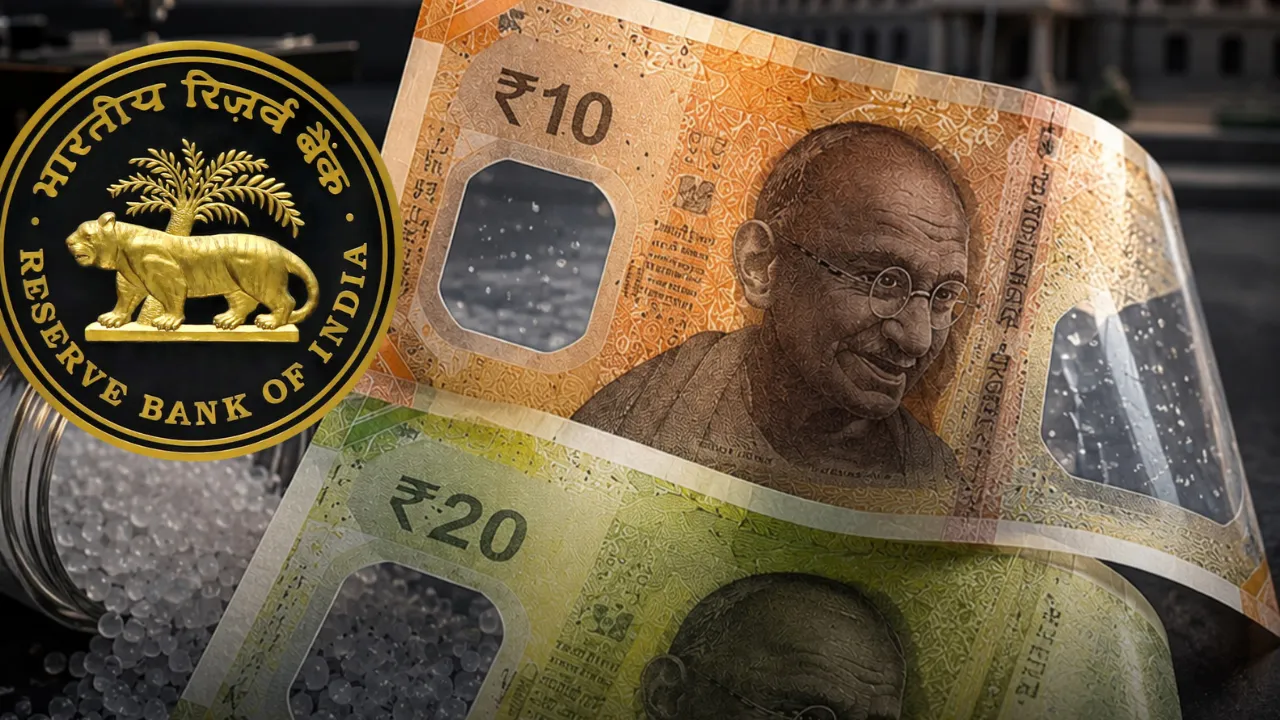
Very soon, you might hold plastic money in your hands! The Indian government has given a green signal to the Reserve Bank of India (RBI) to test new ₹10 and ₹20 plastic (polymer) notes. Pankaj Chaudhary, the Minister of State for Finance, shared this big news in the Lok Sabha. The RBI will first print 100 crore (one billion) pieces of both the ₹10 and ₹20 plastic notes. The total value of these trial notes will be ₹3,000 crore.
But why is the RBI doing this right now? The simple answer is that plastic notes are much stronger. Small notes like ₹10 and ₹20 change hands every day in local markets, so they get dirty and tear very quickly. Plastic notes will easily solve this problem. They do not tear easily, they are totally safe from water, and they last much longer than our normal paper notes.
Now, you might be wondering, "Will my old paper notes become useless?" Please do not worry! The government has clearly stated that old paper notes are not being banned. There is no demonetization happening. Both the old paper currency and the new plastic notes will be used together in the market as valid money.
This is currently just a field trial to see how well these new notes survive in different Indian weather conditions. If this test is fully successful, the RBI will print more plastic notes regularly for the whole country.
Did you know? Australia was the first country to start using plastic notes back in the year 1988. Today, more than 50 countries use them, and very soon, India will proudly join that list!