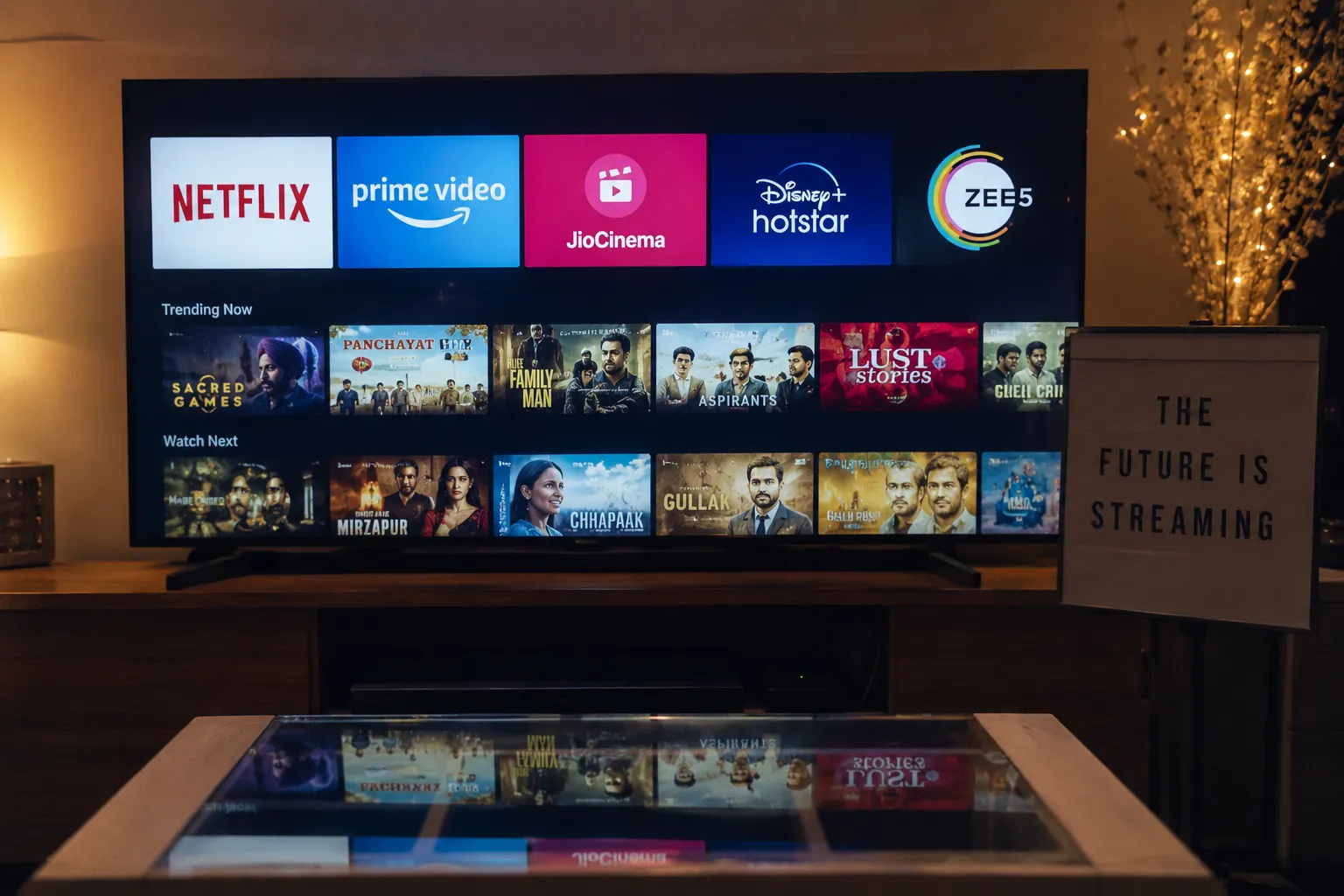
Mumbai, The rapid rise of Over The Top (OTT) streaming platforms has ignited a major debate across the Indian film industry. As digital giants like Netflix, Amazon Prime Video, and JioCinema command massive subscriber bases, the traditional Bollywood ecosystem is undergoing its most radical transformation in decades. While streaming services have opened unprecedented avenues for creative freedom, they have simultaneously disrupted long standing box office economics and traditional viewing habits.
On one hand, OTT platforms have undeniably elevated the quality and variety of Indian storytelling. Content creators are no longer bound by rigid theatrical constraints, leading to a surge in high concept thrillers, dark comedies, and grounded social dramas. Furthermore, the reliance on traditional star power has diminished, allowing versatile character actors, visionary directors, and original writers to lead major projects based purely on merit rather than box office pull.
On the other hand, the traditional theatrical model faces severe financial pressure as mid budget films struggle to draw crowds to multiplexes. With audiences increasingly preferring to watch non spectacle films from the comfort of their homes, theater owners are relying almost exclusively on massive, visual effects heavy event movies to survive. Additionally, streaming algorithms have occasionally led to content saturation, where repetitive small town crime formulas tend to overshadow truly unique indie projects.
Ultimately, OTT platforms are neither a pure blessing nor a complete curse for Hindi cinema rather, they represent an inevitable evolution. While the digital boom has disrupted age old theatrical revenue models, it has permanently expanded the global reach of Indian content and pushed filmmakers to deliver higher narrative standards for a far more demanding audience.