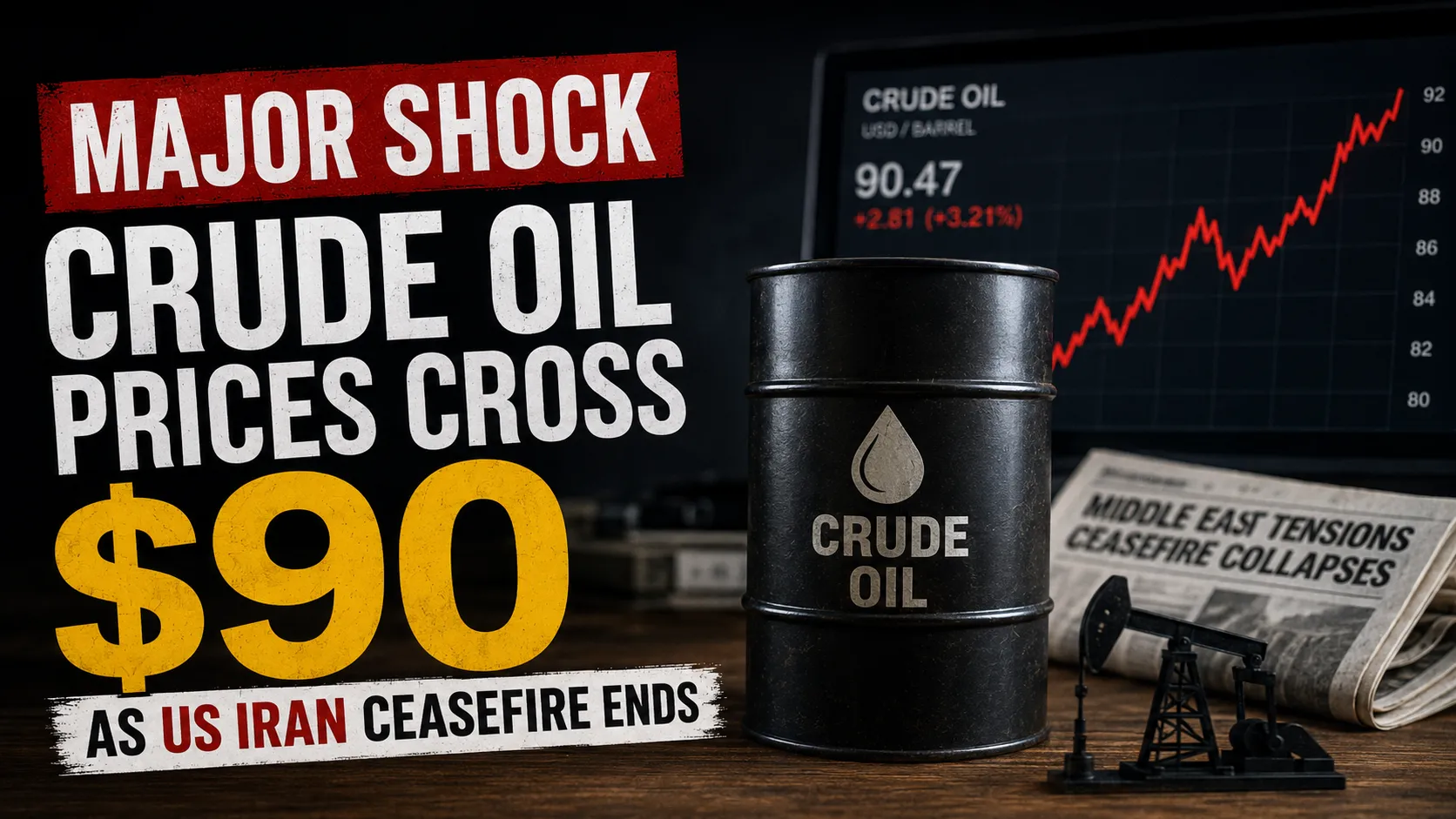
The temporary peace agreement between the United States and Iran has officially come to an end, sending immediate panic waves across global markets. Following the expiry of the ceasefire, diplomatic talks have completely stalled, and tensions in the sensitive Middle East region have escalated sharply. Because of this sudden breakdown, international crude oil prices have jumped rapidly, crossing the crucial psychological mark of $90 per barrel.
Global energy experts are deeply worried because this renewed conflict threatens critical oil supply routes, such as the vital shipping lanes in the Gulf. For a developing country like India, which imports more than 80 % of its crude oil needs, any major spike in international prices hits the economy hard. Higher global crude costs invariably translate into expensive petrol, diesel, and compressed natural gas CNG at domestic fuel stations.
This sudden price hike poses a direct and heavy threat to common household budgets across India. When fuel prices go up, the cost of transporting daily food items, vegetables, and manufactured goods also rises instantly, pushing overall retail inflation higher. Families will likely have to pay more for daily commuting, logistics, and electricity generation, squeezing middle class and working class savings.
Both Washington and Tehran have refused to back down from their aggressive positions, leaving very little room for immediate peace negotiations. As the global energy market nervously reacts to these fast moving geopolitical developments, common citizens, transport businesses, and industries across India are bracing themselves for a heavy financial pinch in the coming weeks if the crisis continues to worsen.