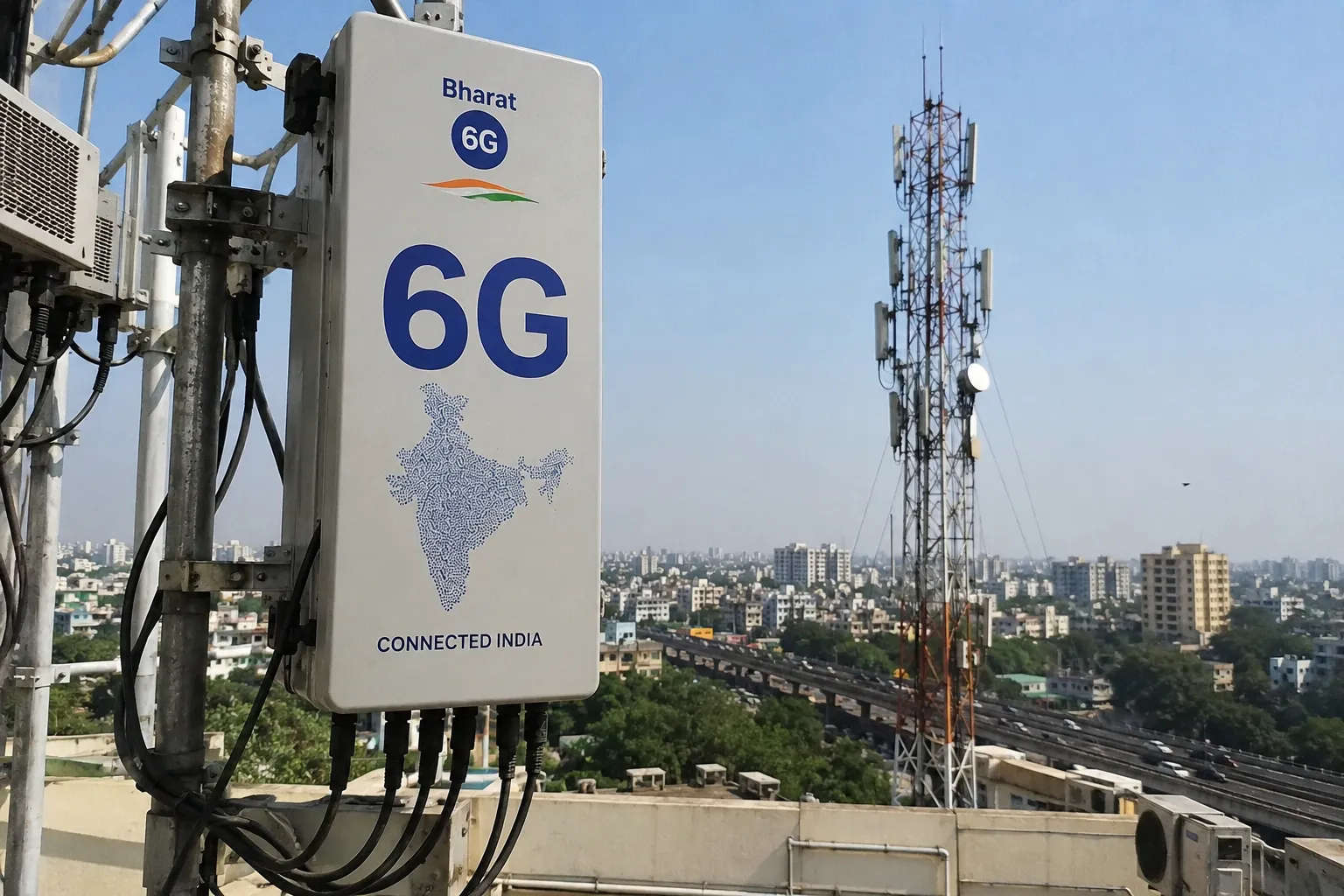
While 5G networks continue their rapid expansion across Indian cities, the nation is already taking bold strides toward leading the global race for next generation telecommunications. Driven by the Department of Telecommunications (DoT), the country has officially set the wheels in motion for its ambitious Bharat 6G Vision roadmap. This initiative aims to design, develop, and deploy fully homegrown 6G technology nationwide by the year 2030. By taking proactive steps early, India is ensuring it remains at the absolute forefront of global digital transformation.
To execute this massive technological leap, the government established the Bharat 6G Alliance, an umbrella organization uniting public and private tech giants, telecom operators, and top academic institutions. This strategic consortium is heavily focused on creating domestic intellectual property and building local hardware manufacturing capabilities under the Make in India banner. Instead of relying on foreign technology providers as in previous decades, India is actively positioning itself to export original 6G patents and cutting edge network equipment to the rest of the world.
The national 6G roadmap is structured across two distinct phases to guarantee seamless execution and commercial viability. The initial phase focused on fundamental research, proof of concept testing, and filing critical technology patents. The current ongoing phase shifts the focus toward large scale equipment manufacturing, field trials, and aligning local frameworks with global standards defined by the International Telecommunication Union.
In terms of performance, 6G technology is expected to deliver mind blowing capabilities that far exceed current internet capabilities. Network speeds are projected to reach up to 1 Terabit per second, making connections roughly 100 times faster than standard 5G, alongside microsecond level latency. Rather than just improving basic smartphone usage, 6G will power futuristic applications like real time holographic communication, automated traffic management, smart robotics, and remote medical procedures.