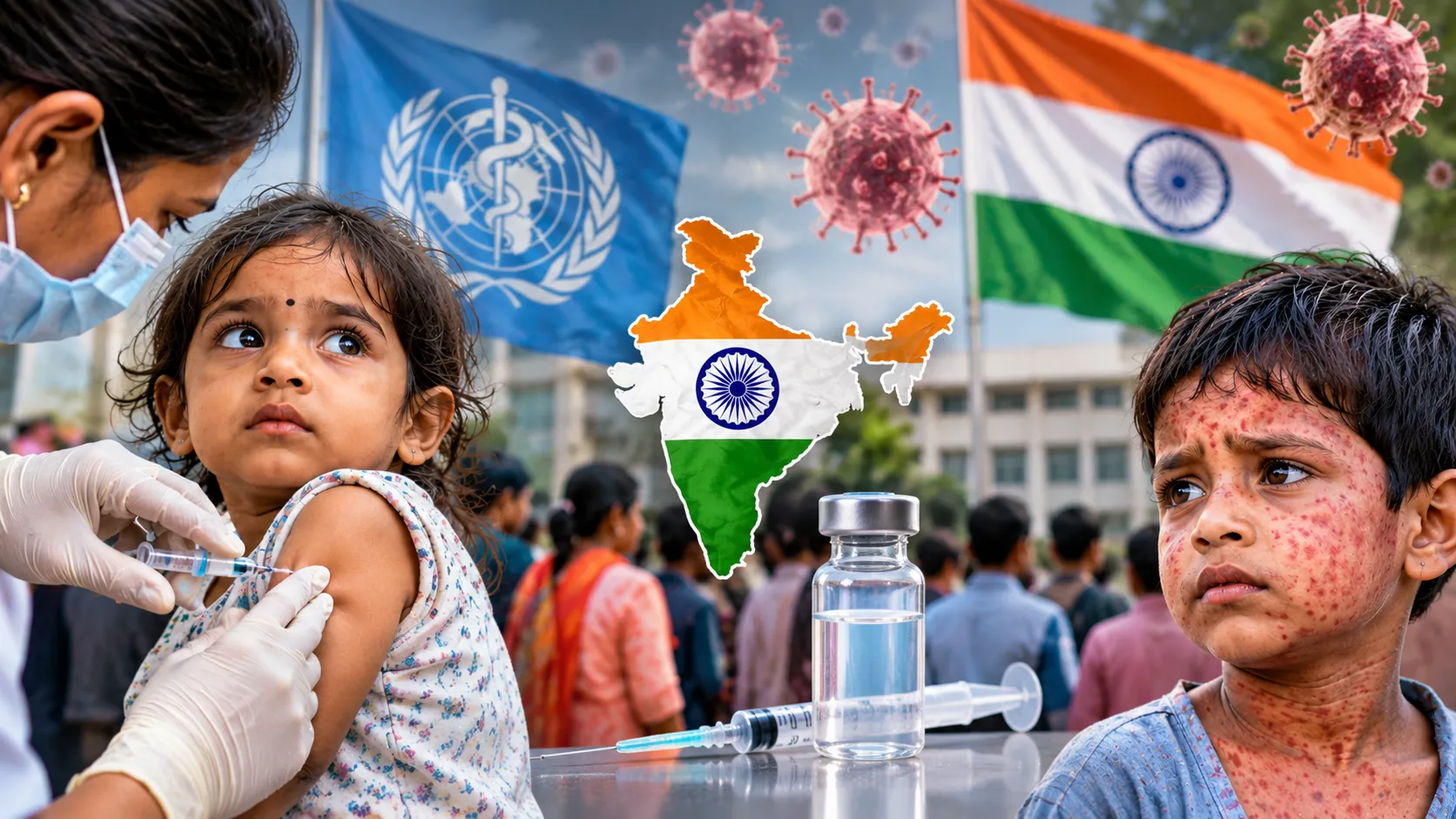
India has made massive strides in child immunisation, yet it is set to miss the World Health Organisation 2026 target to eliminate measles and rubella. Even with a massive annual birth cohort of nearly 23 million children, India achieved 98% coverage for the first measles vaccine dose and 95% for the second. Both figures sit well above global averages. For the first time since tracking began in 2001, the country also dropped out of the top 10 list of nations with the highest number of unvaccinated children.
Why the 2026 Target Remains Out of Reach Despite these gains, local outbreaks persist. India logged 17,995 measles cases in 2025. While that is a steep drop from 65,150 cases in 2023, it is still high enough to block elimination status. To be declared measles free, a country must stop local transmission for three straight years. WHO officials point out that small, hard to reach pockets of unreached children keep the virus circulating. Dr Kate O’Brien of the WHO warned that India cannot afford to slow down its efforts now, noting that falling investment would quickly leave children exposed again.
Looking Ahead to 2029 The timeline has now shifted. Health experts believe India can stop local transmission by 2029 and earn official elimination verification by 2032. As vaccine misinformation fuels outbreaks elsewhere even causing countries like the US to lose their elimination status keeping local momentum going remains India's biggest challenge.