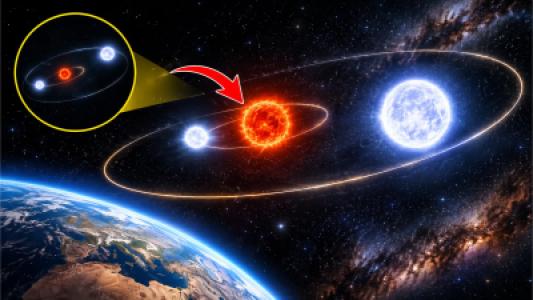
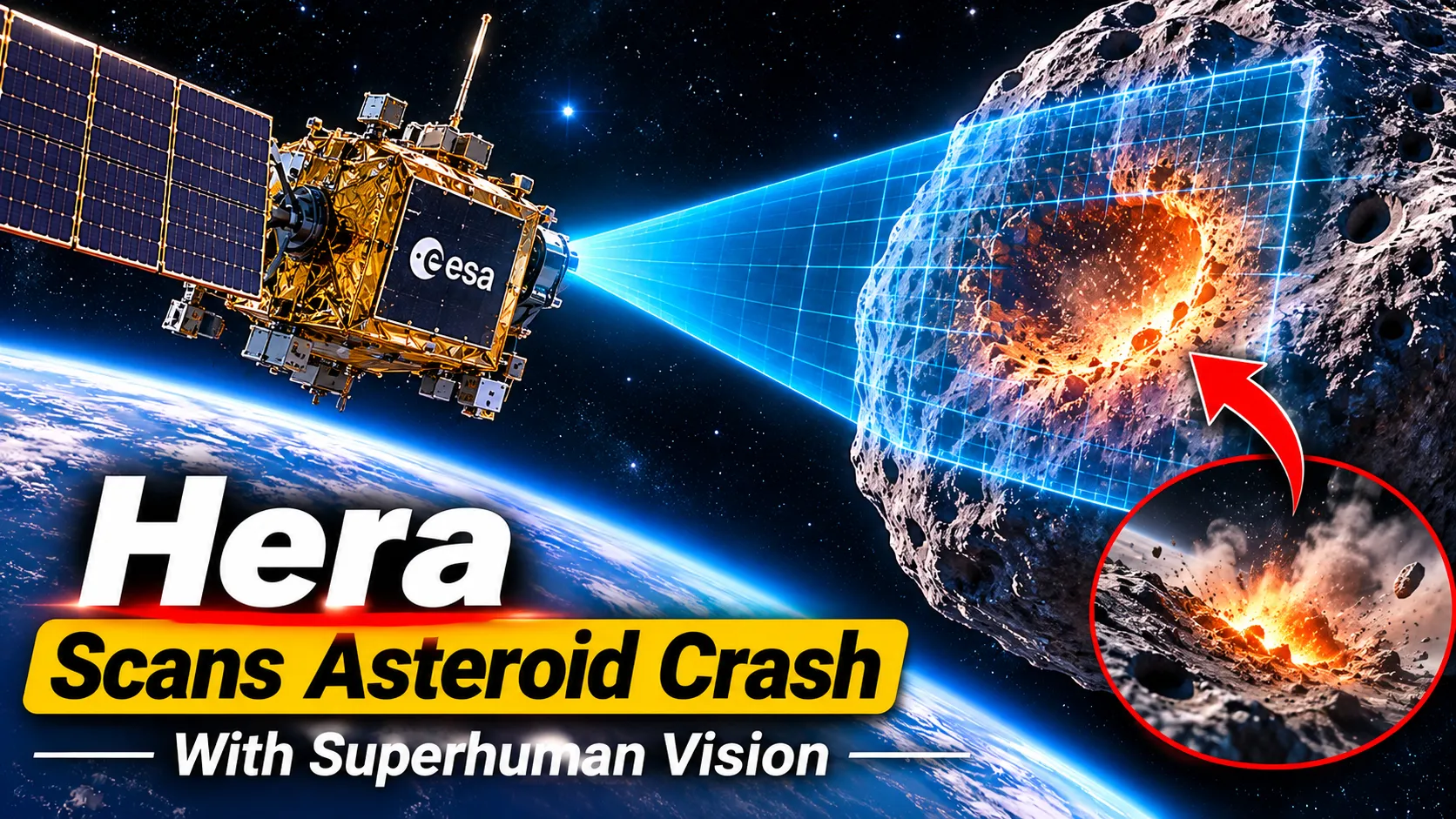
In a major breakthrough for Earth’s safety, the European Space Agency’s (ESA) Hera spacecraft has started scanning a pair of distant space rocks using advanced, "superhuman" cameras. Recently arriving at the binary asteroid system of Didymos and its smaller moonlet, Dimorphos, Hera is conducting a detailed crime scene investigation in deep space.
Back in 2022, NASA’s DART spacecraft intentionally crashed into Dimorphos to test if humans could push a dangerous asteroid off its path. Now, Hera has arrived to check the exact damage. Unlike normal human eyes, Hera’s special instruments see beyond regular light. Its HyperScout camera views the rocks in 25 different colours to reveal what minerals they are made of. Meanwhile, a Japanese thermal infrared camera gives Hera "Superman style heat vision," allowing scientists to map hot and cold spots even in complete darkness.
These early scans show that the larger asteroid, Didymos, spins once every 2.2 hours, pushing loose rocks toward its middle. Soon, Hera will release two tiny mini satellites to fly even closer to the crash crater. This mission will help space agencies protect Earth if a giant asteroid ever threatens our planet in the future.