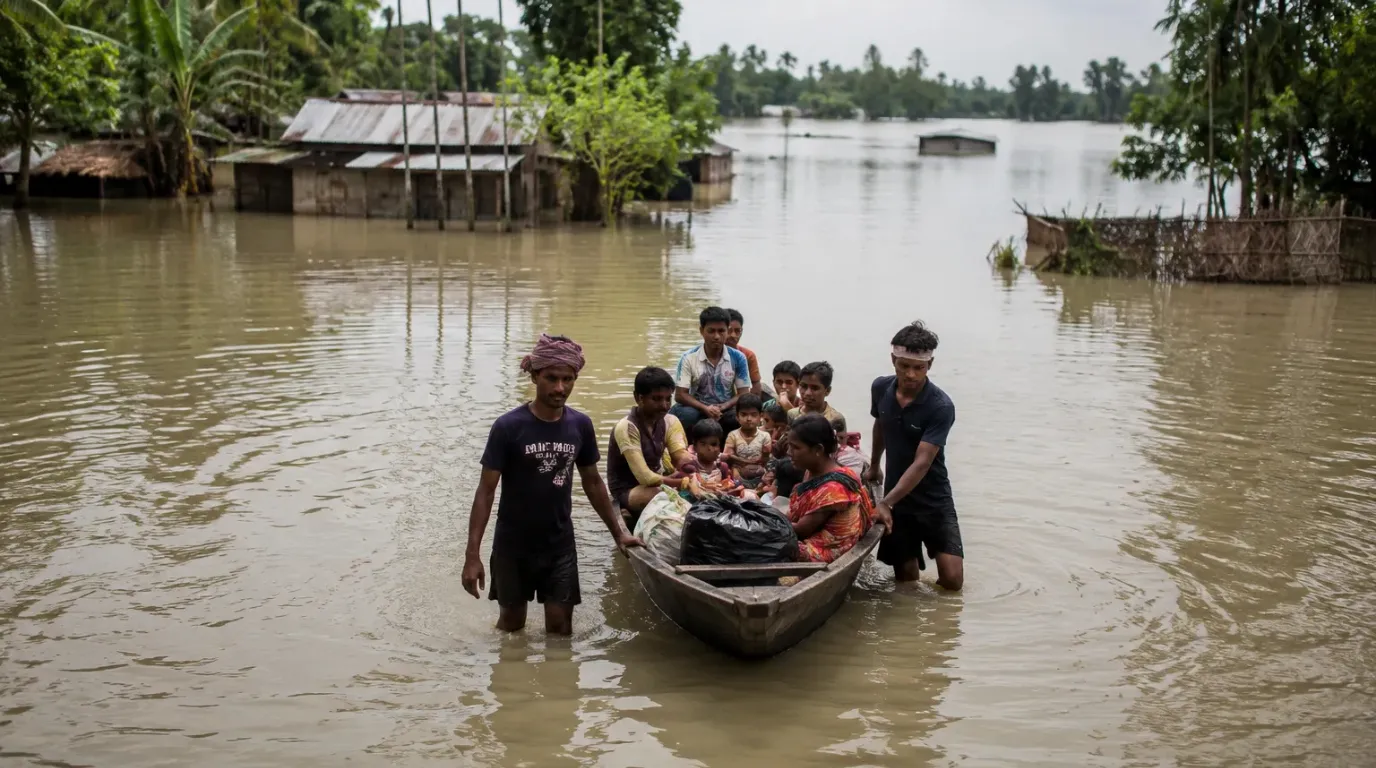
Assam is one of the most beautiful states in India, known for its rivers, forests, tea gardens and rich wildlife. However, every year during the monsoon season, Assam faces severe flooding. The Brahmaputra and its tributaries often overflow due to heavy rainfall, affecting thousands of people across the state.
Floods cause serious damage to homes, roads, bridges, agricultural fields and public infrastructure. Farmers often lose their crops and livestock, while many families are forced to leave their homes and move to safer areas or relief camps. Schools and healthcare services may also be disrupted, creating additional difficulties for local communities.
The floods also affect Assam natural environment and wildlife. Areas near rivers and national parks can become submerged, while riverbank erosion causes the loss of valuable land. Deforestation, soil erosion and changing rainfall patterns can further increase the severity of flooding.
Although floods are a natural part of Assam environment, their impact can be reduced through better planning and disaster management. Stronger embankments, improved drainage systems, early warning systems, flood resistant agriculture and effective rescue operations can help protect communities.
Assam recurring floods are not just a seasonal problem but a major environmental and social challenge. With proper planning, sustainable development and community participation, the state can become better prepared to face future floods.