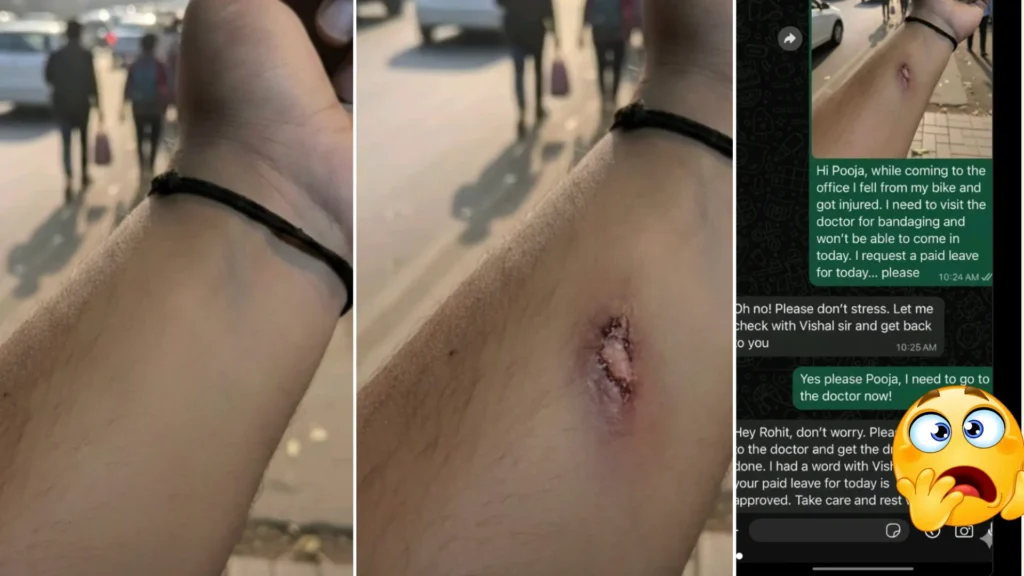
An employee recently found a surprising loophole inside HR verification. By using Google Nano Banana to fake a medical injury and obtain a paid day off. What looked like a minor joke quickly snowballed into a broader debate around AI misuse and workplace trust. A simple photo of the person’s hand completely unscathed was uploaded to the AI tool with the prompt “apply fake injury on my hand.” In seconds, the tool produced a hyper-realistic wound, detailed enough to pass as a genuine bruise or abrasion. The employee sent this edited image to HR. Saying he had fallen off his bike while commuting and needed to see a doctor. Without raising any doubts, HR approved his paid leave almost immediately.
The ease with which the trick worked exposed a dangerous gap in conventional HR verification processes. As generative-AI tools become more powerful, old methods of validating injuries like just asking for a photo no longer hold up. This case forced many to confront how vulnerable organizations are to misuse of AI-generated visuals. Online reaction quickly pivoted from astonishment at the AI’s realism to deeper concerns about workplace culture. Many argued that the root issue isn’t just technological it’s about why employees feel compelled to fake proof at all. If a company demands photographic evidence even for straightforward paid leave, critics say, that reflects an underlying lack of trust. Nearly every commenter called for revamping leave policies and placing more faith in employees rather than subjecting them to proof-based leave approval.
Beyond workplace norms, this incident spotlights broader risks. Experts warn that as AI image generation becomes standard HR teams, insurers, medical institutions. Compliance departments need robust, AI-aware verification tools. Without upgrades, what once seemed like a one-off prank could easily turn into widespread exploitation for fake injuries, false insurance claims, or even identity fraud.